

















Green Comet 220P/McNaught Photographed Soaring Over Namibia
Astrophotographers in Namibia capture a stunning photo of the bright green comet 220P/McNaught soaring through the sky after a rare brightness outburst.

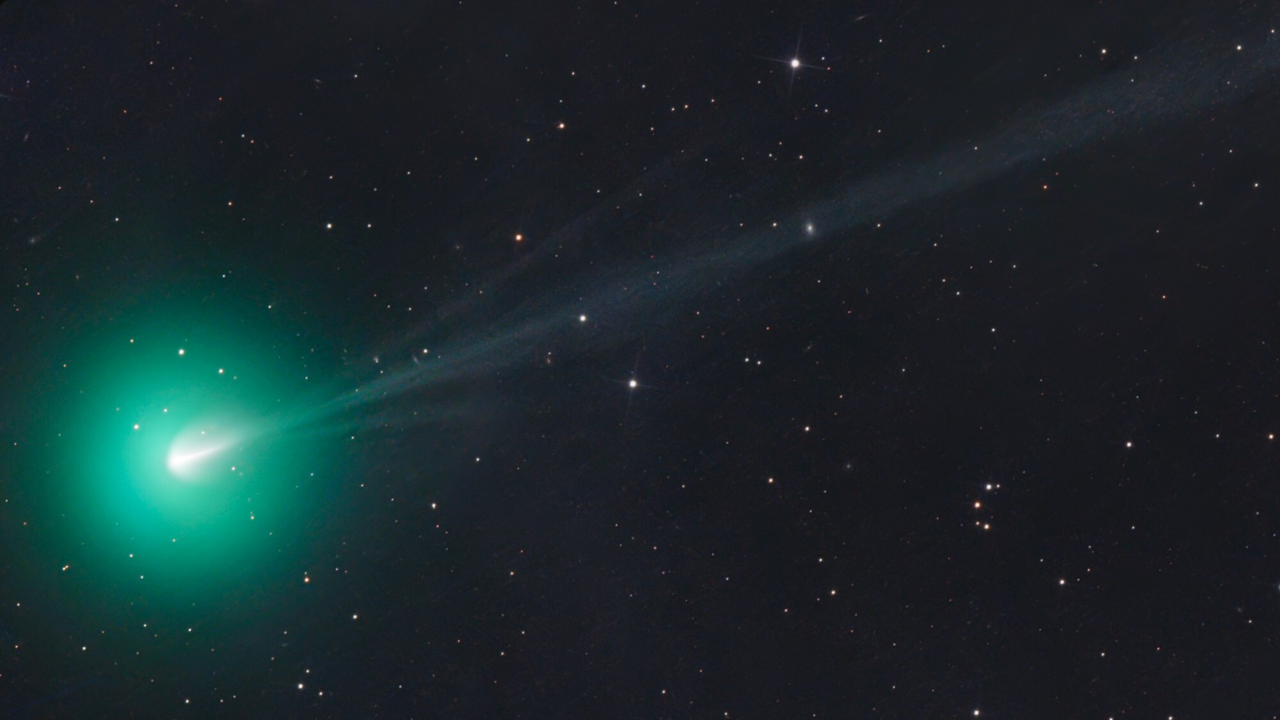
Under the pristine, dark skies of Namibia, astrophotographers Gerald Rhemann and Michael Jäger capture a breathtaking new image of the vibrant green comet 220P/McNaught as it streaks across the celestial sphere this August. The stunning photograph showcases the rare cosmic traveler in exquisite detail during a period of intense, unexpected brightness. This remarkable achievement provides a rare, clear glimpse of a highly elusive astronomical body that typically remains hidden from view.
To freeze this fleeting moment in time, the photography duo utilizes a high-powered 12-inch Astrograph telescope paired with a specialized ZWO ASI 6200 MM Pro camera. Their success relies heavily on the comet's recent volatile behavior; after reaching its closest point to the sun in June, the icy wanderer experienced a massive outburst that amplified its brightness by an astonishing 8,000 times. Although it dimmed shortly afterward, a secondary surge in August boosts its luminosity to 600 times its standard level, creating the perfect window for this high-resolution portrait.
Discovered by Australian astronomer Robert H. McNaught, this particular comet follows an elliptical path that brings it around the sun once every 5.5 years. For the vast majority of its journey through the solar system, the object remains too faint and distant for skywatchers to detect without highly specialized scientific equipment. Spotting such a body requires a perfect alignment of orbital positioning, solar activity, and clear atmospheric conditions, making this successful photographic capture an extraordinary feat of patience and timing.
While direct observations of active comets are rare for the average observer, the remnants of these icy bodies frequently interact with Earth in spectacular ways. Currently, the annual Perseid meteor shower is lighting up the night sky as Earth passes through the debris trail left behind by Comet Swift-Tuttle. This cosmic dust burns up upon entering the atmosphere, producing up to 100 visible shooting stars per hour and offering stargazers a tangible connection to the same primordial materials that form comets like 220P/McNaught.
The stunning clarity of the new Namibian photograph does more than just please the eye; it provides valuable visual data on the behavior of comets during volatile outbursts. These sudden increases in brightness offer astronomers crucial clues about the composition of the comet's nucleus and the volatile gases venting from its surface. Furthermore, such striking imagery bridges the gap between complex astrophysics and the general public, sparking widespread interest in space exploration and the dynamic nature of our solar system.
As 220P/McNaught continues its journey, it will gradually recede into the freezing outer reaches of the solar system, fading from view until its next close approach in several years. Meanwhile, astronomers and amateur stargazers alike will continue to monitor the skies for the next unexpected outburst from other passing comets. This successful imaging campaign sets a new benchmark for ground-based astrophotography, proving that even modest equipment in the hands of dedicated observers can capture the fleeting wonders of the cosmos.
Originally reported by Space.com
What's Your Reaction?
 Like
0
Like
0
 Dislike
0
Dislike
0
 Love
0
Love
0
 Funny
0
Funny
0
 Angry
0
Angry
0
 Sad
0
Sad
0
 Wow
0
Wow
0