















Trump Confirms Secret Plane Switch Over Iran Missile Threat
Donald Trump confirms he secretly swapped planes after the NATO summit in Turkey due to a credible Iranian missile threat detected by US intelligence.

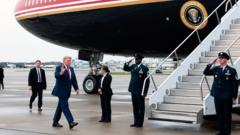
President Donald Trump confirms he secretly swapped aircraft during his departure from a NATO summit in Ankara, Turkey, last month to evade an active security threat. Following urgent instructions from the Secret Service and military officials, the president boarded the iconic Air Force One in full view of the public on July 8 before covertly transferring to a smaller military transport plane. The high-stakes shell game left journalists, staff, and the public believing the commander-in-chief was on the decoy presidential jet, while he actually departed the country on an entirely different flight.
The elaborate ruse involved Trump boarding the primary presidential aircraft, only to slip out the opposite side into an elevated catering truck. The truck transported him to a waiting C-32A military aircraft, a modified Boeing 757 typically reserved for the vice president. To maintain the illusion of a routine departure, Defense Secretary Pete Hegseth boarded the smaller plane separately using external stairs. Meanwhile, unsuspecting journalists and White House staff remained on the decoy Air Force One, where crew members instructed them to keep all window shades tightly closed to hide the president's absence.
This extreme security measure followed intelligence reports of a credible Iranian threat involving a shoulder-fired missile near the summit venue. Tensions between Washington and Tehran had recently spiked, culminating in renewed American military strikes against Iranian targets just one day prior to the departure. The escalation followed a complete collapse of diplomatic negotiations aimed at ending the ongoing conflict. Trump, who previously declared himself Iran's primary target, arrived in Turkey on a modern Boeing 747-8 but publicly claimed he would return on the older Air Force One model for nostalgic reasons, setting the stage for the decoy operation.
Security analysts note that such complex maneuvers highlight the severe risks facing world leaders in active conflict zones. While some critics question whether the decoy flight put the remaining passengers and crew at risk, Trump dismisses these concerns. He argues that his actual transport plane faced a higher level of danger because adversaries would likely target the aircraft they believed he was actually boarding. The president emphasizes that he routinely receives serious threats that remain classified, and he simply defers to the tactical decisions of his protective detail and military advisers.
The incident underscores the volatile nature of modern statecraft and the extraordinary lengths required to protect the executive branch during international travel. It also highlights the delicate balance between operational security and the safety of the traveling press corps, who often fly alongside the president without knowing the immediate dangers surrounding them. By utilizing a major commercial-style decoy, the military demonstrated a willingness to deploy unprecedented deception tactics to counter real-time intelligence threats in hostile environments.
Moving forward, this high-profile evasion will likely reshape the protocols for future presidential travel to high-risk regions. As geopolitical tensions with Iran remain unresolved, security agencies are expected to implement even more stringent protective measures. Future overseas summits will undoubtedly feature heightened surveillance and potentially more frequent use of decoy operations. For now, the successful extraction serves as a stark reminder of the persistent dangers shadowing the presidency on the global stage.
Originally reported by BBC World
What's Your Reaction?
 Like
0
Like
0
 Dislike
0
Dislike
0
 Love
0
Love
0
 Funny
0
Funny
0
 Angry
0
Angry
0
 Sad
0
Sad
0
 Wow
0
Wow
0