























Spain Prepares for Rare Total Solar Eclipse Over Europe
Spain prepares for a rare total solar eclipse that will turn day into night, offering skywatchers a stunning spectacle and scientists valuable solar insights.


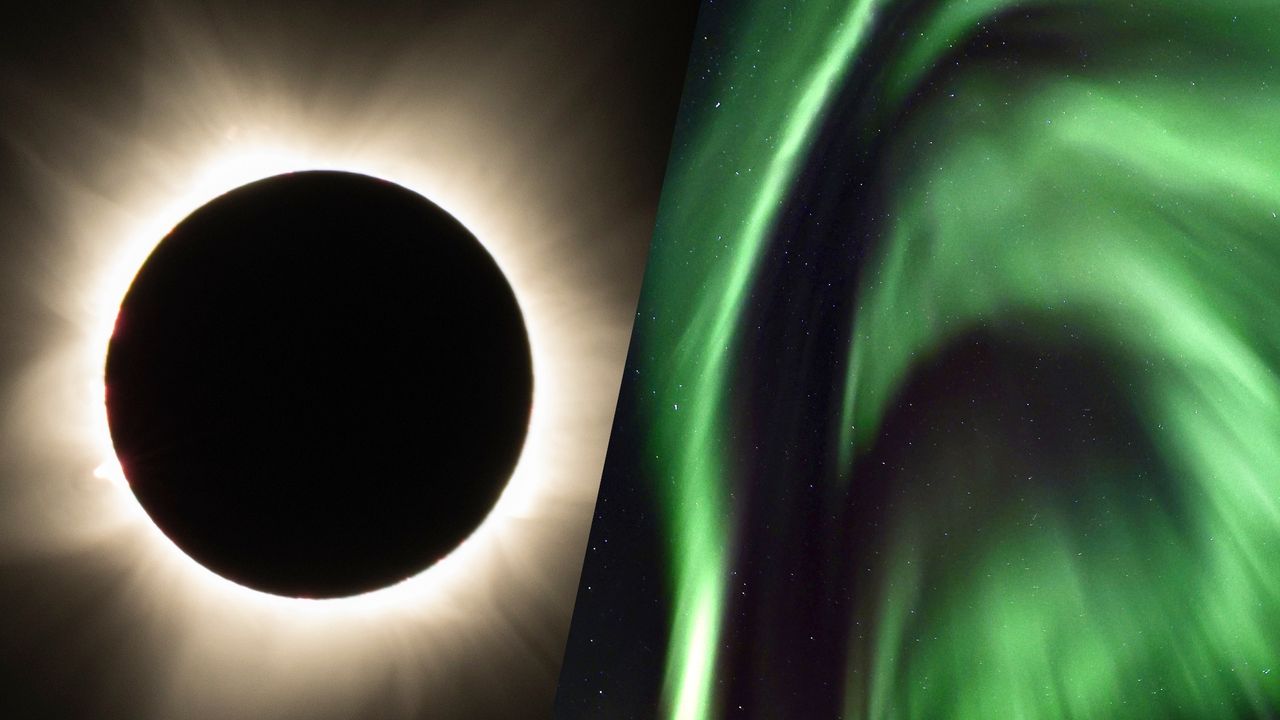
A rare total solar eclipse is poised to plunge northern Spain into temporary darkness today as the moon passes directly between the Earth and the sun, completely blocking out the daylight. This highly anticipated celestial event draws eager skywatchers to the historic region of Segovia and other northern Spanish territories, where the path of totality will briefly turn day into night. Meanwhile, millions of curious observers across Europe, Canada, the northern United States, and northwest Africa prepare to witness a dramatic partial eclipse.
The path of totality, where the moon completely obscures the sun's bright face, stretches across a narrow corridor of the Iberian Peninsula, offering a fleeting window of complete darkness. Outside this direct path, a partial eclipse will paint the afternoon sky, casting unique crescent-shaped shadows across multiple continents. Observers are securing specialized solar viewing glasses to safely witness the moon taking a bite out of the sun. Local authorities in Spain report a massive influx of international tourists, with hotels and viewing sites reaching maximum capacity hours before the event begins.
Total solar eclipses occur when the orbital alignment of the Earth, moon, and sun is mathematically perfect, a cosmic coincidence that happens only once every few years somewhere on the globe. For any specific geographic location, however, hosting a total eclipse is an incredibly rare occurrence that often happens only once every few centuries. Historically, these awe-inspiring events have transitioned from objects of fear and ancient superstition into celebrated moments of scientific curiosity and public wonder, uniting people globally in appreciation of orbital mechanics.
Astrophysicists and researchers are deploying specialized instruments along the path of totality to study the sun's elusive outer atmosphere, known as the corona, which remains invisible during normal daylight due to the sun's overwhelming glare. During the brief minutes of totality, scientists can analyze solar winds, magnetic fields, and temperature fluctuations that influence space weather. These ground-based observations provide critical high-resolution data that cannot be replicated by space telescopes, helping researchers understand how solar storms affect satellite communications and power grids on Earth.
Beyond the scientific breakthroughs, the eclipse generates a massive economic boost for host communities as hospitality, travel, and tourism sectors experience unprecedented demand. Educational institutions are leveraging the event to spark interest in science, technology, engineering, and mathematics among students through live viewing parties and interactive workshops. The shared experience of watching the sky darken in the middle of the day fosters a unique sense of global community, reminding humanity of its small place within the vast cosmos.
Once the shadow passes and daylight returns, the work for scientists will just be beginning as they analyze terabytes of newly acquired data to unlock the secrets of our solar system. This eclipse serves as a vital stepping stone for future astronomical missions and refines our predictive models for solar behavior. Skywatchers are already looking ahead to the next major celestial alignments, marking their calendars for future eclipses that will continue to captivate the world and push the boundaries of human knowledge.
Originally reported by France24
What's Your Reaction?
 Like
0
Like
0
 Dislike
0
Dislike
0
 Love
0
Love
0
 Funny
0
Funny
0
 Angry
0
Angry
0
 Sad
0
Sad
0
 Wow
0
Wow
0