
















Will Northern Lights Be Visible During the 2026 Solar Eclipse?
Will the northern lights be visible during the August 12, 2026 total solar eclipse? Experts explain if this rare double phenomenon is actually possible.

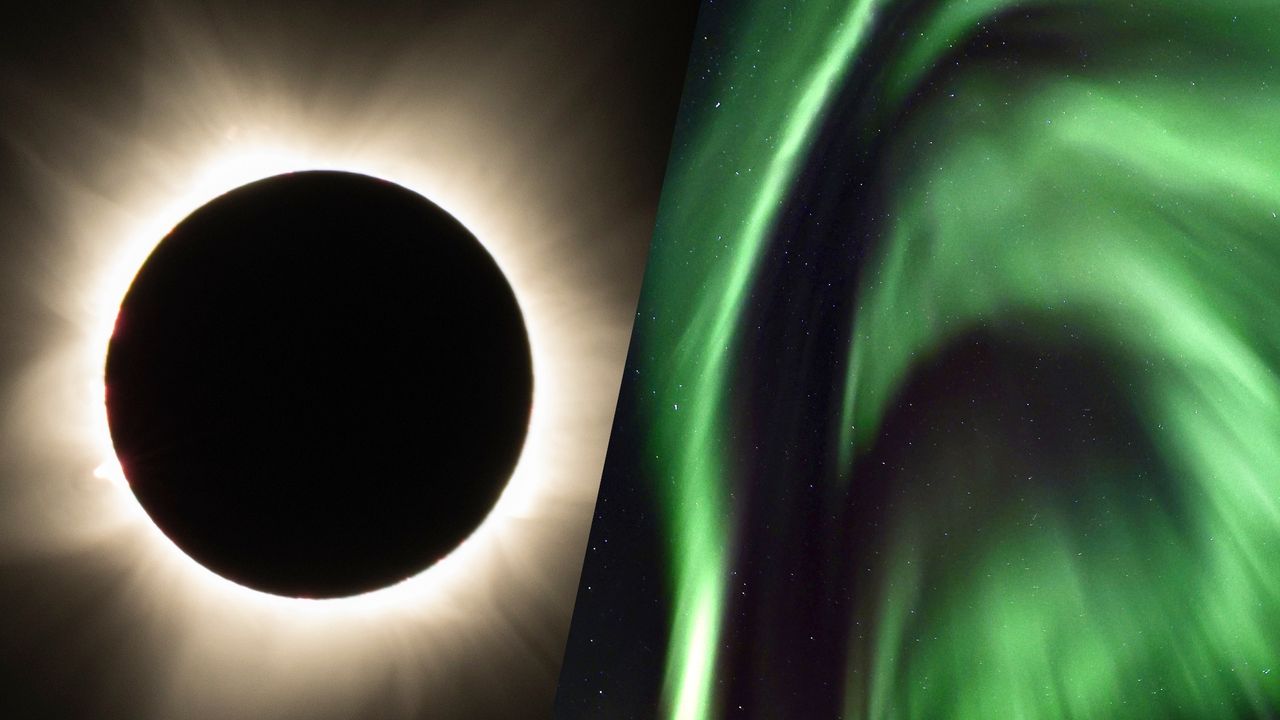
A spectacular total solar eclipse will sweep across the Northern Hemisphere on August 12, 2026, offering skywatchers in Greenland, Iceland, and northern Spain a rare front-row seat to one of nature's greatest shows. During this highly anticipated celestial event, the moon will completely block the sun, plunging the daytime sky into a dramatic, fleeting twilight. This brief period of darkness will expose the sun's elusive outer atmosphere, known as the corona, to millions of eager onlookers gathered along the path of totality.
While the sudden plunge into darkness is thrilling on its own, scientists and eclipse chasers are eyeing an even rarer possibility: the simultaneous appearance of the northern lights. Because the path of totality crosses directly through the auroral zone, the geographic ring around Earth's magnetic pole where auroras frequently dance, observers might witness a dual celestial phenomenon. Although totality does not create the pitch-black darkness of midnight, it dims the sky to a level resembling civil twilight, which is theoretically dark enough for exceptionally bright auroras to become visible to the naked eye.
Under normal circumstances, the northern lights remain completely invisible during the day because the sun's intense glare easily overpowers their delicate glow. Even during twilight, only the most vibrant auroral displays can break through the lingering ambient light. For a dual eclipse and aurora viewing to occur, the auroral structures must be incredibly intense and positioned away from the immediate vicinity of the eclipsed sun, as the brilliant glow of the solar corona itself can easily wash out any nearby auroral activity.
Space weather experts indicate that witnessing this double spectacle requires an extraordinary alignment of space weather conditions. Because the eclipse occurs on the daytime side of the planet, standard nightside auroral activity—which relies on stored energy release—will not suffice. Instead, Earth must experience a severe G4 or G5 geomagnetic storm, the highest categories of solar disturbances. Such extreme storms, triggered by powerful solar eruptions like coronal mass ejections, flood the dayside polar regions with high-energy particles, supercharging the auroral oval and boosting its brightness to visible levels.
The convergence of a total solar eclipse and a visible aurora would represent an exceedingly rare astronomical jackpot, combining two of the most sought-after sights in the night sky into a single moment. For photographers and scientists alike, capturing this event would provide unprecedented visual data and breathtaking imagery of Earth's magnetosphere interacting with solar radiation during a period of solar occultation. It underscores the dynamic and interconnected nature of our solar system, transforming a standard eclipse expedition into a high-stakes chase for a once-in-a-lifetime cosmic coincidence.
As the countdown to August 2026 begins, astronomers and travelers are already finalizing their travel plans to the prime viewing locations in the far north. While the eclipse itself is guaranteed, the appearance of the northern lights remains a wild card dependent on the unpredictable whims of the sun. Skywatchers will be closely monitoring solar activity reports in the days leading up to the event, hoping that a timely solar storm will align perfectly with the moon's shadow to deliver an unforgettable double feature in the sky.
Originally reported by Space.com
What's Your Reaction?
 Like
0
Like
0
 Dislike
0
Dislike
0
 Love
0
Love
0
 Funny
0
Funny
0
 Angry
0
Angry
0
 Sad
0
Sad
0
 Wow
0
Wow
0