


















Ukrainian Drone Strike Kills 12 in Central Russian City
A Ukrainian drone strike on the Russian city of Nizhnekamsk has killed at least 12 people and wounded 39, targeting key oil and energy infrastructure.


A devastating Ukrainian drone strike hits the industrial city of Nizhnekamsk in Russia's central Tatarstan region on Monday, leaving at least 12 people dead and 39 others injured. The long-range bombardment strikes deep inside Russian territory, hitting both industrial and civilian targets more than 1,000 kilometers from the Ukrainian border. This high-casualty assault marks one of the deepest aerial penetrations into the Russian heartland since the conflict escalated, bringing the realities of the war directly to a major energy-producing hub.
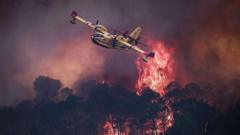
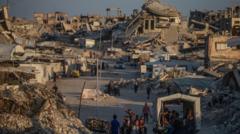
The aerial offensive targets Nizhnekamsk's massive oil refining infrastructure, sparking fires and disrupting local operations. Meanwhile, intense military activity continues across the broader theater of war, with Russia launching 126 drones overnight against Ukrainian targets. In response, Russian defense systems reportedly intercept 456 Ukrainian drones across various regions, though officials remain silent on how many successfully penetrate the Tatarstan airspace. Simultaneously, a brutal Russian artillery barrage strikes a residential area in the village of Bugaivka within Ukraine's northeastern Kharkiv region, killing five civilians and destroying multiple homes.
Nizhnekamsk sits in a highly industrialized zone vital to the Russian economy, making its refineries prime targets for Kyiv's evolving military strategy. For months, Ukrainian forces have progressively scaled up their long-range drone capabilities to strike deep behind enemy lines, aiming to cripple the economic engine that funds the Russian military machine. This strategy represents a significant shift from localized frontline defense to aggressive, asymmetric warfare designed to disrupt fuel supplies and degrade Moscow's logistics.
Military analysts view these deep-penetration strikes as a calculated effort to alter the political dynamics of the war by demonstrating that no part of Russia is safe from retaliation. Ukrainian leadership openly states that bringing the conflict directly to the Russian populace serves as a crucial lever to force the Kremlin into serious peace negotiations. By systematically targeting energy infrastructure, Kyiv seeks to create domestic pressure within Russia, raising the economic and social costs of sustaining the multi-year invasion.
The economic fallout from these persistent refinery strikes is already visible, causing noticeable fuel shortages and a measurable reduction in Russia's overall oil-refining capacity. However, the escalation of these long-range attacks also carries a heavy human toll, resulting in a sharp increase in civilian casualties across both nations. As energy grids and residential neighborhoods increasingly find themselves in the crosshairs, the humanitarian crisis deepens, leaving populations on both sides of the border vulnerable to the devastating side effects of modern siege warfare.
Looking ahead, the conflict appears set to intensify as both nations double down on their long-range strike capabilities. As Ukraine refines its domestic drone technology and Russia continues its relentless missile and artillery campaigns, the geographical boundaries of the war will likely expand further. With neither side showing a willingness to back down, the coming months promise a grueling war of attrition where economic endurance and technological innovation will dictate the path toward an eventual resolution.
Originally reported by DW News
What's Your Reaction?
 Like
0
Like
0
 Dislike
0
Dislike
0
 Love
0
Love
0
 Funny
0
Funny
0
 Angry
0
Angry
0
 Sad
0
Sad
0
 Wow
0
Wow
0