























Stunning Photo Captures Green Comet 220P/McNaught Over Namibia
Astrophotographers in Namibia capture a spectacular image of the green comet 220P/McNaught glowing 600 times brighter than normal in the night sky.

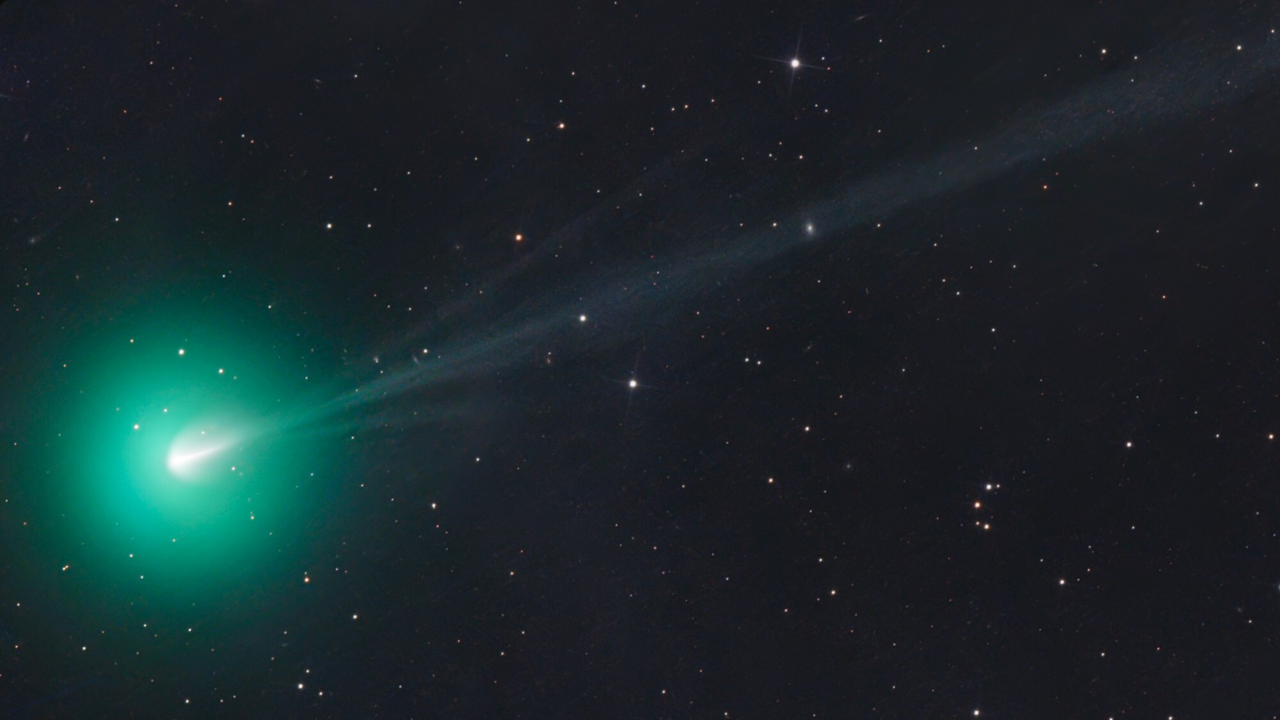
Two astrophotographers capture a breathtaking image of a glowing green comet as it streaks across the night sky over Namibia. During August, skywatchers Gerald Rhemann and Michael Jäger successfully photograph the rare comet 220P/McNaught during a period of intense brightness. This celestial event offers a rare glimpse of the icy wanderer, which is normally too faint to see from Earth without specialized equipment. The resulting photograph showcases the comet in stunning detail, highlighting its vibrant green coma and distinct tail against a backdrop of distant stars.
To achieve this photographic feat, the duo utilizes a 12-inch Astrograph telescope paired with a ZWO ASI 6200 MM Pro camera. This advanced setup allows them to resolve the fine structures of the comet's atmosphere during a secondary surge in its luminosity. Earlier in June, the comet reached its perihelion—the closest point to the sun in its orbit—triggering a massive outburst that increased its brightness by 8,000 times. Although that initial flare subsided, a subsequent outburst in August boosted the comet's brightness to roughly 600 times its normal baseline, providing the perfect window for this capture.
Discovered by Australian astronomer Robert H. McNaught, this particular comet completes a journey around the sun once every 5.5 years. Like most short-period comets, 220P/McNaught spends most of its time frozen and invisible in the outer solar system. Spotting such objects remains a challenge, as they are typically small, dark, and unpredictable. Only when they venture close to the sun does solar radiation vaporize their icy surfaces, creating the glowing envelope of gas and dust known as a coma, which occasionally flares up in dramatic outbursts like the ones observed this year.
While direct sightings of comets are rare, their cosmic legacy frequently lights up the night sky in the form of meteor showers. As comets travel through space, they leave behind trails of dusty debris that intersect with Earth's orbit. Currently, skywatchers are enjoying the annual Perseids meteor shower, a spectacular event generated by the debris trail of
Originally reported by Space.com
What's Your Reaction?
 Like
0
Like
0
 Dislike
0
Dislike
0
 Love
0
Love
0
 Funny
0
Funny
0
 Angry
0
Angry
0
 Sad
0
Sad
0
 Wow
0
Wow
0