























Solar Eclipse 2026: Millions Watch Total Eclipse in Europe
The 2026 total solar eclipse swept across Europe, drawing millions to Spain while one in eight people worldwide witnessed a spectacular partial eclipse.


A spectacular total solar eclipse plunges parts of Europe into daytime darkness on Wednesday evening, marking the continent's first such celestial event in nearly three decades. Millions of eager skywatchers and international travelers crowd into Spain, positioning themselves directly within the highly anticipated "path of totality." For several breathtaking minutes, the Moon aligns perfectly between the Earth and the Sun, completely obscuring the solar disk and casting a dramatic shadow across the Iberian Peninsula. Meanwhile, a vast global audience of over one billion people—roughly one in eight individuals worldwide—witnesses a stunning partial phase of this rare astronomical phenomenon.
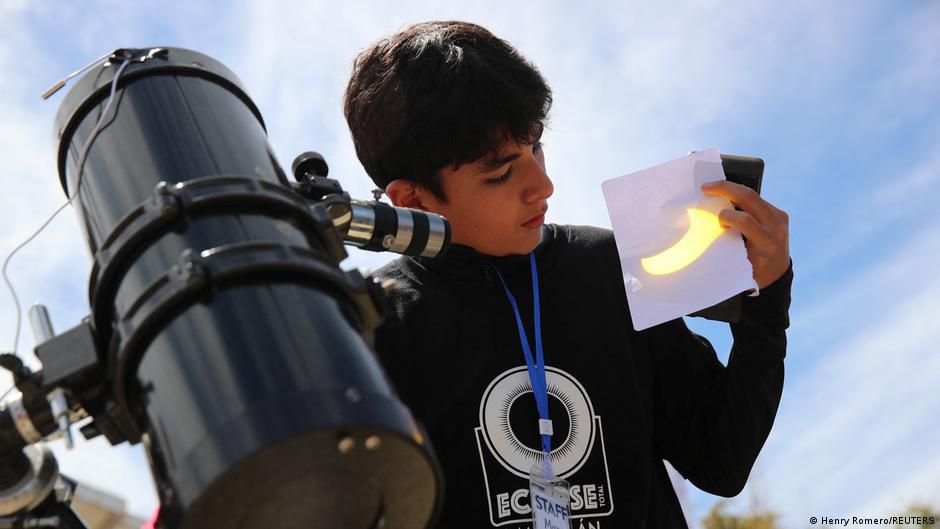
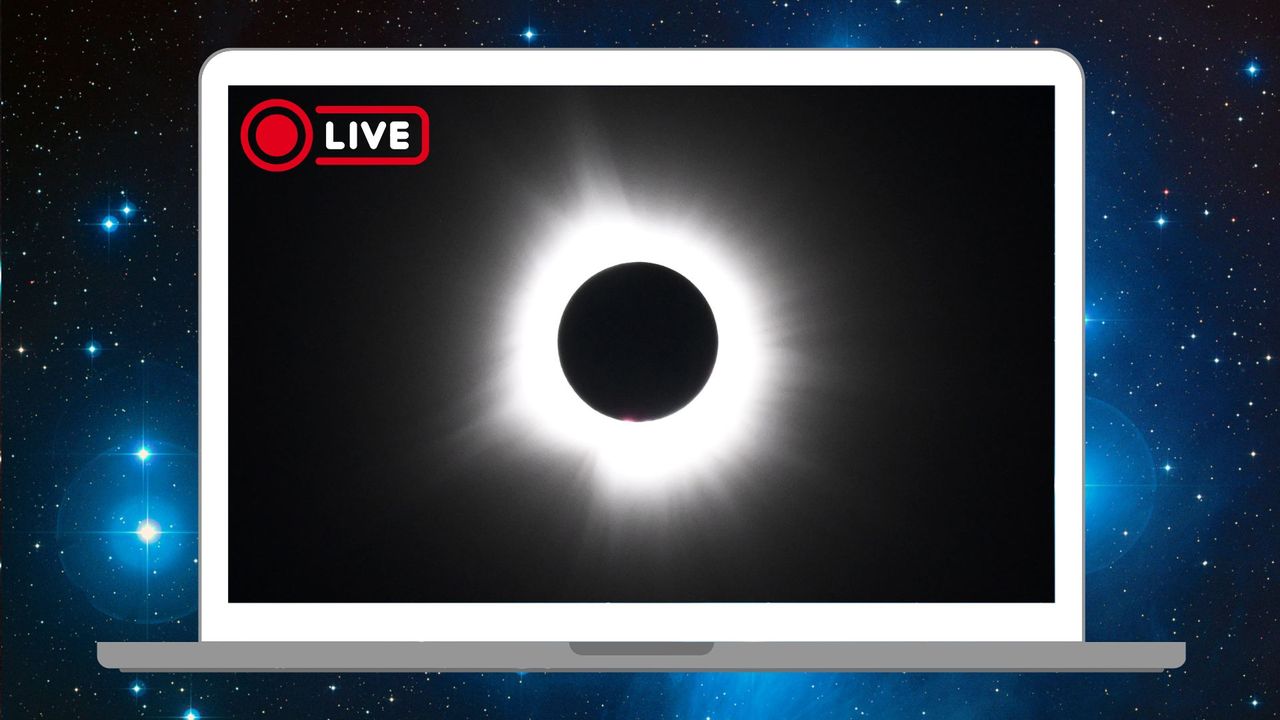
As the shadow sweeps from the Atlantic Ocean across the Spanish mainland, temperatures drop and local wildlife falls silent. Cities like Madrid, Valencia, and Zaragoza become bustling hubs of activity, with public parks and historic plazas packed with onlookers wearing protective solar glasses. The sudden transition to artificial night reveals the Sun's elusive outer atmosphere, the corona, which glows as a shimmering halo of white light around the dark silhouette of the Moon. Coastal areas offer particularly pristine views, where the horizon glows with a spectacular sunset effect.
This extraordinary event breaks a long-standing astronomical drought for the European continent, which last experienced a total solar eclipse of this magnitude in the late twentieth century. Total eclipses occur when the Moon passes directly between the Earth and the Sun, but because the Moon's shadow is relatively narrow, any given spot on Earth only experiences totality once every few centuries. Spain's unique geographical position during this cycle makes it the ultimate destination for eclipse chasers, who spent years planning for this specific alignment to witness the precise orbital mechanics of our solar system.
Scientists and researchers seize this invaluable opportunity to study the Sun's corona, a region of intense heat and magnetic activity that remains difficult to observe under normal conditions. Specialized observatories deploy advanced imaging technology to capture high-resolution data during the brief window of totality. These observations help astrophysicists better understand solar winds and space weather, which can significantly impact satellite communications and power grids on Earth. Additionally, atmospheric scientists monitor the sudden temperature drops and wind pattern shifts caused by the rapid cooling of the air within the path of the lunar shadow.
Beyond the scientific breakthroughs, the eclipse delivers a massive economic windfall to local communities, particularly in Spain's hospitality and tourism sectors. Hotels, restaurants, and transportation services report record-breaking bookings, with many venues selling out months in advance. This collective experience fosters a unique sense of global unity, as people from diverse backgrounds gather in shared spaces to marvel at the wonders of the cosmos. The event serves as a powerful reminder of humanity's shared connection to the universe, transcending borders through a collective
Originally reported by France24
What's Your Reaction?
 Like
0
Like
0
 Dislike
0
Dislike
0
 Love
0
Love
0
 Funny
0
Funny
0
 Angry
0
Angry
0
 Sad
0
Sad
0
 Wow
0
Wow
0