

















North Macedonia Peace: 25 Years After the Ohrid Agreement
Twenty-five years after the Ohrid Framework Agreement ended ethnic conflict in North Macedonia, peace remains fragile as political tensions threaten reconciliation.

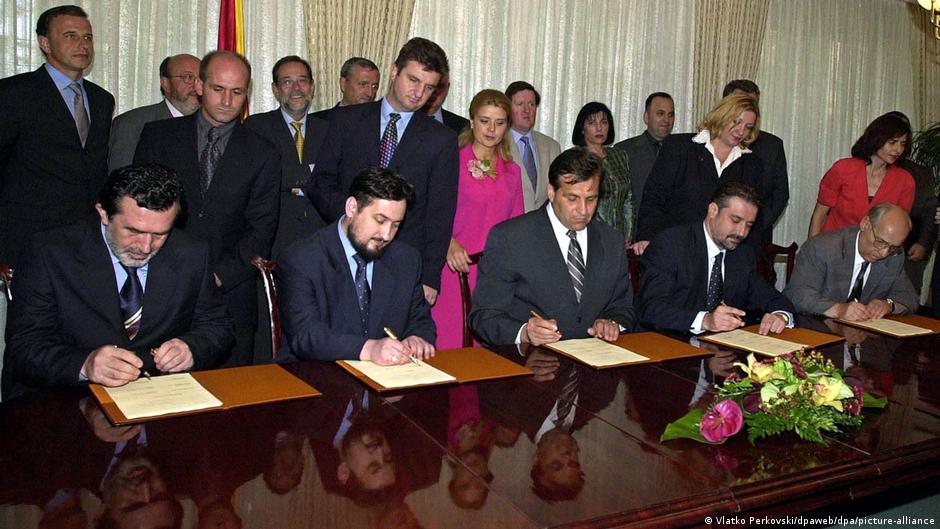
A quarter-century after a landmark peace agreement halted a bloody ethnic conflict in North Macedonia, the Balkan nation faces renewed political instability and warnings that its hard-won peace is fracturing. The 2001 Ohrid Framework Agreement successfully ended a six-month armed uprising by ethnic Albanian insurgents, preventing a full-scale civil war through a delicate power-sharing system. Today, however, a major political shift in Skopje raises urgent questions about whether the country can preserve the ethnic balance that has maintained order for twenty-five years.
The current friction stems from a recent transition of power that sidelined the Democratic Union for Integration, the primary political representative for the ethnic Albanian minority, after two decades in government. The conservative VMRO-DPMNE party now leads the administration, pushing the former guerrilla commander turned politician, Ali Ahmeti, into the opposition. Ahmeti warns that the new government is actively undermining minority rights, citing recent challenges to the official use of the Albanian language and efforts to dismantle equitable representation policies in state institutions.
The roots of this tension trace back to February 2001, when fighting erupted between ethnic Albanian rebels and state security forces, threatening to drag the former Yugoslav republic into the same violence that devastated Bosnia and Kosovo. Western powers, including NATO and the European Union, intervened to broker a diplomatic resolution before the casualties escalated further. Though the brief war claimed hundreds of lives and displaced over 170,000 people, the resulting peace accord successfully restructured the state to guarantee extensive rights to the Albanian minority, who comprise more than a quarter of the nation's 1.8 million residents.
Political observers and former officials express deep concern that the foundational pillars of this peace are now eroding. Former Foreign Minister Bujar Osmani emphasizes that the national conversation has shifted from how to fully implement the peace treaty to whether the country can prevent its complete dismantling. He warns that reversing these constitutional guarantees risks undoing decades of progress and could plunge the country back into systemic instability, as the current administration favors a more nationalistic, mono-ethnic vision for the state.
This political regression threatens to expose the unresolved trauma of a society that achieved coexistence but never fully realized genuine reconciliation. While the guns have remained silent for twenty-five years, ethnic Macedonians and Albanians still live largely segregated lives, educated in separate schools and divided by deep-seated mistrust. The current political rhetoric exacerbates these existing societal cleavages, turning language and employment quotas back into battlegrounds and threatening the fragile social cohesion of the young democracy.
Looking ahead, the stability of North Macedonia depends on the government's willingness to uphold the spirit of the Ohrid Agreement while pursuing European integration. If the ruling coalition continues to marginalize minority representation, it risks reigniting ethnic grievances and stalling its path toward European Union membership. To secure a peaceful future, political leaders must move beyond divisive rhetoric and recommit to a multi-ethnic state model that respects the rights and identity of all its citizens.
Originally reported by DW News
What's Your Reaction?
 Like
0
Like
0
 Dislike
0
Dislike
0
 Love
0
Love
0
 Funny
0
Funny
0
 Angry
0
Angry
0
 Sad
0
Sad
0
 Wow
0
Wow
0