

















Trump Secretly Swaps Planes Over Iran Assassination Threat
President Trump secretly used a decoy Air Force One to evade Iranian threats, highlighting the deeply personal nature of the ongoing conflict with Iran.

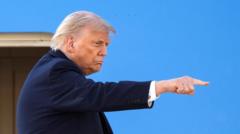
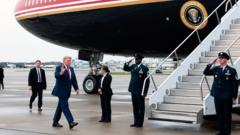
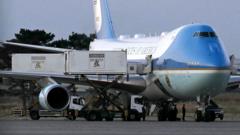
President Donald Trump secretly abandoned his official Air Force One jet last month, boarding an alternate aircraft in Turkey to evade what intelligence officials deemed a credible Iranian missile threat. The highly classified operation, which occurred during Trump's return from a NATO summit in Ankara, involved an elaborate decoy strategy to protect the commander-in-chief. While the presidential Boeing 747 departed with members of the press and White House staff on board, Trump slipped away in a security maneuver designed to shield him from potential aerial bombardment.
To execute the high-stakes deception, security personnel transported the president to and from the alternate aircraft inside a standard airport catering truck. This covert transport allowed Trump to bypass normal boarding procedures undetected while the primary Air Force One served as a high-profile decoy. The White House has maintained strict secrecy regarding the specific nature of the intelligence, but the operation successfully shielded the president from the suspected threat corridor before the public or the media realized he was missing from his usual transport.
This dramatic evasion highlights the deeply personal nature of the ongoing military conflict between the United States and Iran, which escalated dramatically in February. At that time, a joint US-coordinated Israeli airstrike killed Iran's Supreme Leader, Ayatollah Ali Khamenei, along with several top military commanders. Trump has previously characterized the military campaign as a preemptive strike, asserting that Iranian operatives had repeatedly targeted him for assassination in the years leading up to the current conflict.
Security analysts note that while covert presidential travel to active conflict zones is not unprecedented, the use of a decoy aircraft and a catering truck transport represents an extreme departure from standard protocols. Historically, administrations have traveled secretly to regions like Iraq or Ukraine by utilizing media embargo agreements rather than active deception of the press corps. Meanwhile, defense officials continue to emphasize the ongoing threat environment, pointing to the neutralization of specialized Iranian assassination units as evidence of Tehran's persistent focus on targeting high-ranking American leadership.
The revelation of this secret operation presents a stark contrast to the administration's public narrative regarding the war. For a president who consistently projects absolute strength and claims that the adversary is thoroughly defeated on the battlefield, the image of hiding inside a catering truck to escape a missile threat carries complicated political optics. The extreme security measures demonstrate that despite official declarations of victory, the foreign adversary retains the capability and intent to strike at the highest levels of the American government.
Looking ahead, this incident guarantees that presidential travel protocols will remain under heightened security for the foreseeable future, particularly when operating near regional flashpoints. The ongoing threat of retaliation suggests that the conflict is far from resolved, despite official rhetoric. As the United States navigates this volatile security landscape, the administration must balance the necessity of stringent, sometimes embarrassing, protective measures against the public relations challenge of maintaining a posture of undisputed military dominance.
Originally reported by BBC World
What's Your Reaction?
 Like
0
Like
0
 Dislike
0
Dislike
0
 Love
0
Love
0
 Funny
0
Funny
0
 Angry
0
Angry
0
 Sad
0
Sad
0
 Wow
0
Wow
0