













Trump Hid in Catering Truck to Avoid Iran Threat, Reports Say
Reports reveal Donald Trump secretly swapped planes using a catering truck in Turkey to evade a credible Iranian missile threat after a NATO summit.

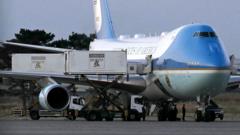
President Donald Trump secretly executes a high-stakes aircraft swap in Ankara, Turkey, to evade a credible Iranian missile threat following a NATO summit last month. In a highly coordinated security maneuver, Trump boards Air Force One in full view of the media before covertly transferring to a smaller military transport plane. The clandestine operation successfully shields the American leader from a potential strike as he departs the Turkish capital, leaving traveling journalists and several staff members entirely unaware of his sudden departure from the primary presidential jet.
The elaborate ruse unfolds on the tarmac of Ankara airport, where Trump initially boards the older Boeing 747 presidential model. Once inside, he secretly transitions to a C-32A military aircraft—a modified Boeing 757—using an elevated catering truck positioned on the blind side of the plane. To maintain the illusion of a routine departure, Defense Secretary Pete Hegseth boards the smaller military aircraft separately. Meanwhile, crew members instruct reporters and staff remaining on the original Air Force One to lower their window shades, keeping them in the dark about the president's absence until the aircraft lands in the United Kingdom, where Trump quietly reunites with the primary jet.
This extreme security measure comes amid a sharp escalation in geopolitical tensions between Washington and Tehran. Just one day prior to the secret flight, the United States resumed military strikes against Iranian targets following a complete collapse of diplomatic negotiations. Trump has repeatedly declared himself the primary target of the Iranian regime, emphasizing that his administration's aggressive foreign policy stance places him under constant threat. The decision to swap planes highlights the severe security environment surrounding the administration's diplomatic missions in the region.
Military aviation experts note that decoy maneuvers and sudden aircraft changes represent standard contingency plans when intelligence agencies detect active, credible threats against high-value government assets. While the White House declines to officially confirm the specific tactical details of the Ankara swap, officials emphasize that the presidential fleet possesses state-of-the-art defensive countermeasures. During the final leg of the journey back to Washington, Trump acknowledges the persistent dangers to reporters, describing the flight path as highly hazardous due to hostile foreign adversaries.
This unprecedented incident underscores the volatile nature of modern presidential travel and the extraordinary lengths to which security details must go to protect the commander-in-chief. The deception of the traveling press corps raises fresh questions about transparency and safety protocols for civilian observers who fly alongside the president. By keeping key personnel on a decoy aircraft that could have been targeted, the administration demonstrates a willingness to prioritize tactical deception over standard operating procedures, highlighting the grim reality of state-sponsored threats against American leadership.
Looking ahead, this event is likely to trigger a comprehensive review of presidential transport protocols during international summits. As the diplomatic rift between the United States and Iran deepens, future overseas trips will undoubtedly feature heightened security measures and potentially more unpredictable travel itineraries. The successful execution of this covert operation proves that security agencies can adapt instantly to active threats, but it also signals a tense future where high-profile diplomatic engagements will be shadowed by the constant threat of military retaliation.
Originally reported by BBC World
What's Your Reaction?
 Like
0
Like
0
 Dislike
0
Dislike
0
 Love
0
Love
0
 Funny
0
Funny
0
 Angry
0
Angry
0
 Sad
0
Sad
0
 Wow
0
Wow
0