



















Why a German City Is Turning Soccer Fields Into Flood Zones
Following a devastating 2023 storm surge, the German city of Kiel is rethinking its urban design and adapting to climate change with innovative flood zones.

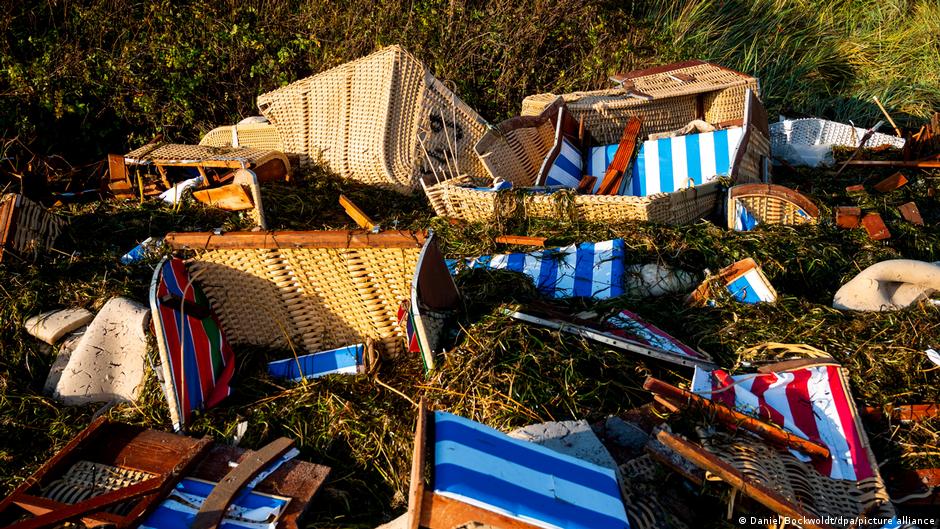
A historic storm surge along the Baltic Sea coast is forcing the northern German port city of Kiel to radically redesign its urban landscape to survive escalating climate threats. The October 2023 disaster, the worst in over a century and a half, devastated coastal infrastructure across Schleswig-Holstein and southern Denmark, washing away nearly nine feet of Kiel's protective coastal bluffs in a single event. This unprecedented erosion, which quadrupled the region's typical annual land loss, serves as a stark wake-up call for local authorities racing to protect their citizens from increasingly volatile weather.
In response to the growing vulnerability of its shoreline, Kiel is pioneering aggressive municipal adaptation strategies. Following its landmark 2019 declaration of a climate emergency, the city established a dedicated climate adaptation division in 2025 and enacted a comprehensive resilience plan in February 2026. These initiatives focus on bolstering physical defenses and preparing the urban infrastructure for extreme heat, heavy rainfall, and rising sea levels. Rather than relying solely on traditional concrete barriers, the city is implementing a blend of natural defenses and community-led initiatives, offering grants and streamlined permits to help residents fortify their own properties.
For years, municipal governments globally hesitated to focus on climate adaptation, fearing that preparing for the worst would undermine crucial efforts to reduce fossil fuel emissions. Kiel officials initially shared this unease, viewing adaptation as a potential distraction from the primary goal of climate protection. However, the sheer frequency of extreme weather events has shifted the paradigm, forcing cities from Santa Cruz in the United States to Quezon City in the Philippines to realize that mitigation and adaptation must coexist. Local leaders now emphasize that while cutting emissions remains the first line of defense to prevent future warming, immediate preparation is vital to survive the damage already locked into the climate system.
Balancing these dual priorities presents complex challenges for urban planners. Martina Baum, the head of Kiel’s climate adaptation division, highlights the inherent conflict in solutions like energy-intensive air conditioning, which protects vulnerable populations during heatwaves but increases greenhouse gas emissions when power grids still rely on fossil fuels. To resolve this paradox, Kiel is prioritizing nature-based solutions that cool the city without increasing electricity consumption. Urban planners are actively greening building facades, redesigning public parks to channel cool air currents directly into the city center, and testing resilient tree species capable of surviving the harsher, drier climates of the future.
The significance of Kiel's proactive stance extends far beyond its borders, serving as a blueprint for coastal cities worldwide. The 2023 disaster transformed climate change from an abstract scientific forecast into an undeniable, daily reality for the city’s residents and policymakers. By integrating ecological restoration with urban planning, Kiel demonstrates how local governments can systematically reduce vulnerability while maintaining their commitment to carbon neutrality. This dual-track approach proves that adapting to current environmental crises does not require abandoning long-term sustainability goals, but rather demands more creative, localized engineering.
Looking ahead, the success of Kiel’s climate strategy will depend on its ability to scale up these green innovations before the next major storm hits. As global temperatures continue to rise, the Baltic coast will inevitably face even stronger surges and more unpredictable weather patterns. Kiel's ongoing experiments with climate-resilient vegetation and natural cooling corridors will provide critical data for other vulnerable maritime communities. Ultimately, the city's transformation from a vulnerable port into a resilient green fortress underscores a vital truth: the future belongs to cities that actively adapt to the changing planet rather than those that merely wait for the next tide to rise.
Originally reported by DW News
What's Your Reaction?
 Like
0
Like
0
 Dislike
0
Dislike
0
 Love
0
Love
0
 Funny
0
Funny
0
 Angry
0
Angry
0
 Sad
0
Sad
0
 Wow
0
Wow
0