

















Rocket Lab Unveils GHOST Portable Spaceport Technology
Rocket Lab has introduced GHOST, a portable spaceport system packed in shipping containers to launch Electron and HASTE rockets from anywhere in the world.

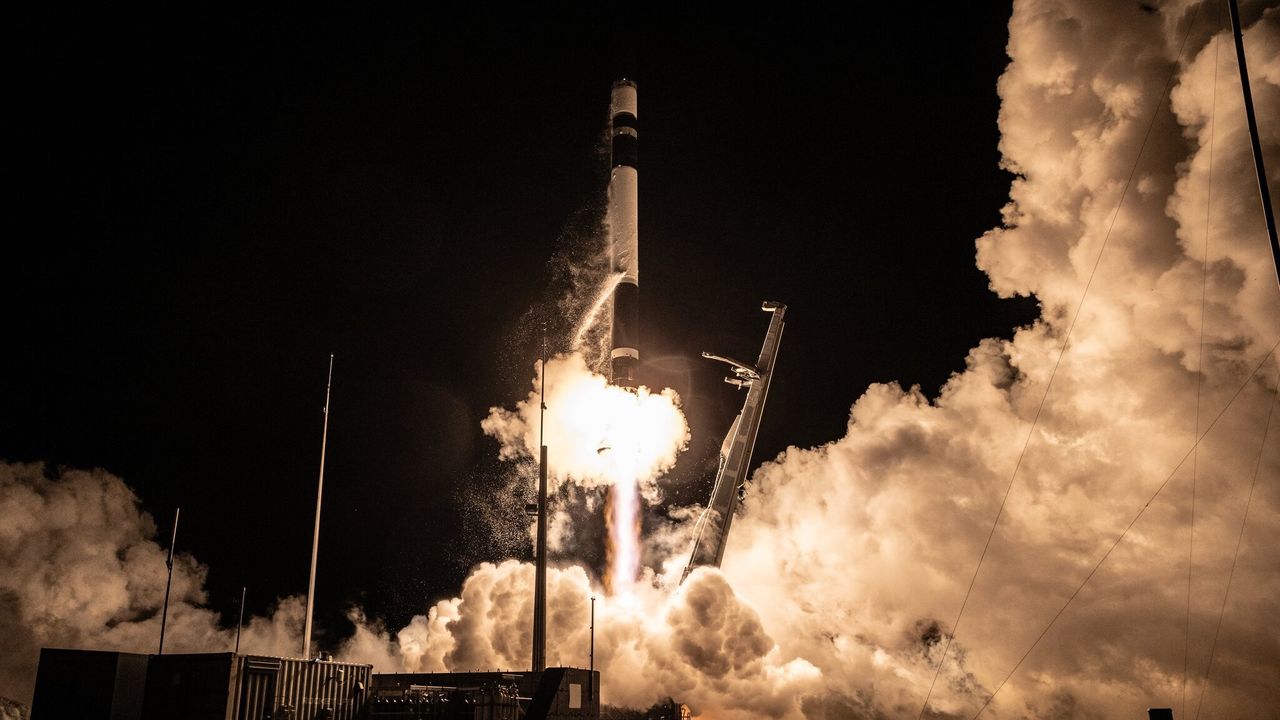
Aerospace manufacturer Rocket Lab introduces a revolutionary portable launch system called GHOST, designed to deploy rockets and ground support infrastructure anywhere in the world. Announced on August 10, the Global Hypersonic & Orbital Spaceport Technology system packs entire launch facilities into standard shipping containers. This mobile setup enables rapid, flexible missions for both orbital and suborbital rockets, dramatically expanding geographic reach. The innovation transforms how the industry approaches rapid-response space access and national security operations.
The GHOST system houses complete launch infrastructure, including range control, ground support, and rockets, within standard freight containers. It supports two primary vehicles: the 18-meter-tall Electron orbital launcher and its suborbital counterpart, the Hypersonic Accelerator Suborbital Test Electron, or HASTE. While Electron serves as a reliable workhorse for small satellite deployment, HASTE operates as a specialized vehicle for testing technologies in hypersonic flight. By containerizing these systems, the technology allows operators to establish a fully functional launch site on demand, bypassing the years of construction typically required for permanent spaceports.
Currently, operations run out of three active launch pads located at two permanent sites in New Zealand and Virginia. Since its debut in 2017, the workhorse Electron rocket has completed 83 missions, establishing a consistent track record for small-satellite delivery. Meanwhile, the HASTE rocket has logged nine flights since its initial launch in June 2023, serving clients who require rapid suborbital testing. The development of GHOST stems directly from client feedback, specifically from a hypersonic test customer seeking greater operational mobility and flexibility.
Beyond this portable technology, work continues on a larger, partially reusable launch vehicle named Neutron. Designed to compete with medium-lift rockets, Neutron features a reusable first stage that will return to Earth for recovery and refurbishment. Although the larger rocket missed its initial target launch date in 2024, development is progressing steadily, with all major components of the vehicle now undergoing rigorous testing. A second launch pad at the Virginia facility is already complete to accommodate this upcoming heavy-lift vehicle once it is ready for flight.
This shift toward containerized, mobile launch systems represents a major leap forward for national security and defense sectors. Governments and military agencies can now deploy sovereign orbital capabilities or conduct critical missile defense testing from virtually any location on Earth without relying on fixed, vulnerable infrastructure. The ability to launch from non-traditional sites enhances strategic resilience, making space assets far more difficult for adversaries to target. Furthermore, it democratizes access to space for nations that lack the resources or geography to build permanent, multi-million-dollar spaceports.
Looking ahead, the portable system will see its first major deployment at the Pacific Spaceport Complex in Alaska, where two new launch pads will utilize the GHOST framework. This expansion will significantly increase mission frequency and provide unprecedented orbital flexibility for commercial and government clients alike. As the aerospace sector increasingly prioritizes rapid-response capabilities, mobile spaceports are poised to become the new standard for tactical space access. The successful integration of these transportable systems, alongside the eventual debut of the larger Neutron rocket, positions the industry for a highly adaptable and responsive future.
Originally reported by Space.com
What's Your Reaction?
 Like
0
Like
0
 Dislike
0
Dislike
0
 Love
0
Love
0
 Funny
0
Funny
0
 Angry
0
Angry
0
 Sad
0
Sad
0
 Wow
0
Wow
0