



















NASA Updates Voyager 2 Software to Extend Probe's Lifespan
NASA successfully executes a software update on Voyager 2, extending the 1977 interstellar space probe's operational lifespan by another year.

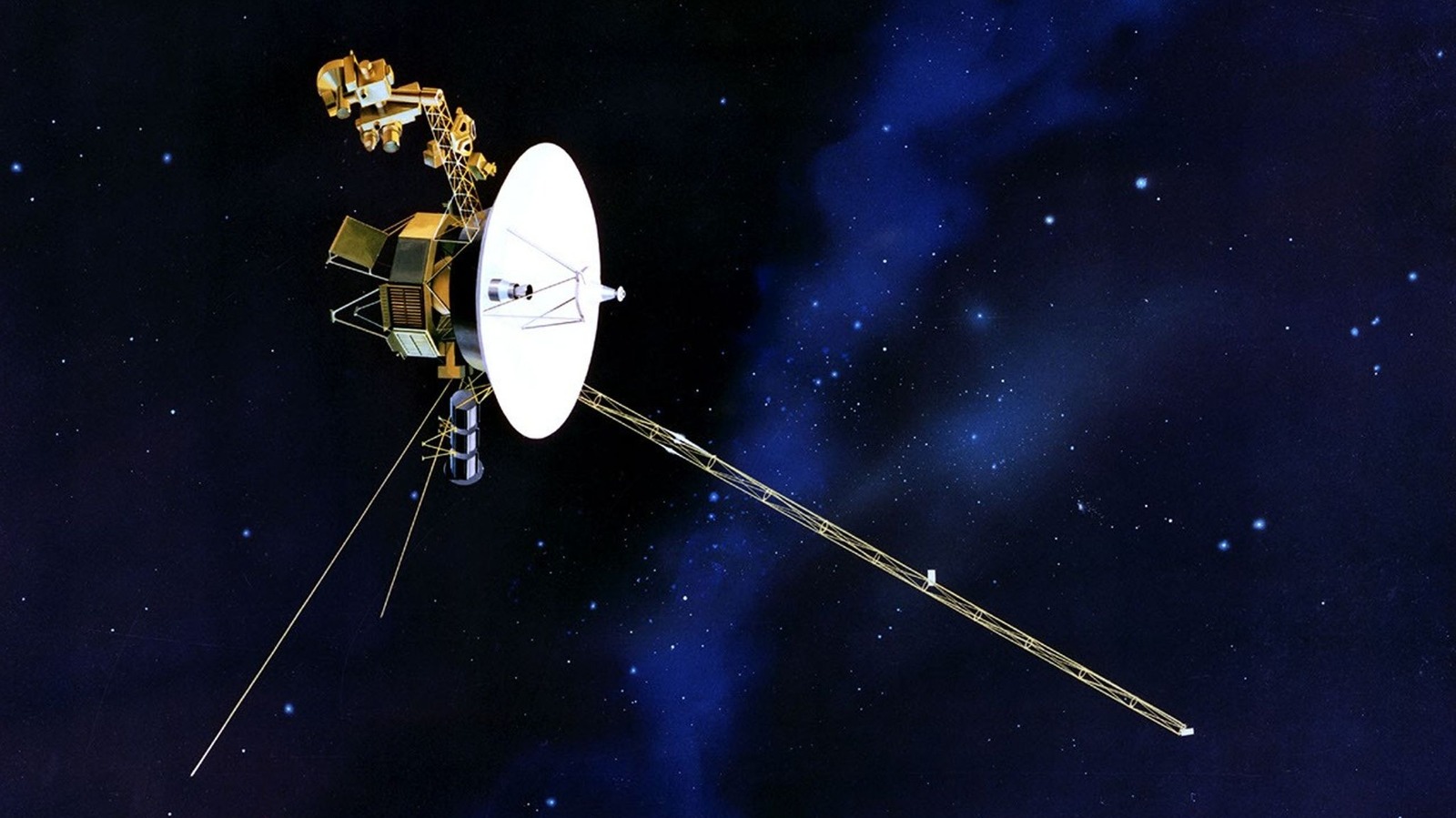
A daring deep-space rescue executed from billions of miles away breathes new life into one of humanity's oldest cosmic explorers. Engineers recently beamed a complex software update across 13 billion miles of emptiness to the Voyager 2 spacecraft, successfully extending its scientific operations for another year. This critical intervention prevents the immediate shutdown of one of the probe's vital instruments, ensuring the legendary traveler continues its historic journey through the uncharted territory beyond our solar system.
The delicate operation, dubbed "Big Bang," required a precise sequence of commands to manage the spacecraft's rapidly depleting power supply. Voyager 2 relies on a radioisotope thermoelectric generator that converts heat from decaying plutonium into electricity, a system that loses approximately four watts of output annually. To counteract this decline, operators deactivated several powered components simultaneously and replaced them with lower-power alternatives. Crucially, the team also ensured the spacecraft would maintain a safe operating temperature in the freezing void even with fewer active heaters.
Launched in 1977, just weeks before its twin Voyager 1, the spacecraft originally set out to study the solar system's outer gas giants. It reached Jupiter in 1979 and spent the subsequent decade visiting Saturn, Uranus, and Neptune. After completing this planetary grand tour, the probe continued its outward trajectory, officially crossing into interstellar space in 2018. Since entering this uncharted realm, Voyager 2 has sent back crucial data on the density and temperature of the plasma existing outside the heliosphere, the protective bubble generated by our sun.
Managing a spacecraft active for nearly half a century presents unprecedented engineering challenges. The technology aboard Voyager 2 dates back to the mid-1970s, featuring computers with a tiny fraction of the memory found in modern devices. Sending commands across the vast gulf of space requires immense patience, as signals take over 18 hours to travel one way. This successful software patch demonstrates the remarkable resilience of these aging systems and the creative problem-solving of the flight control team, who continue to stretch the limits of deep-space exploration.
The success of this high-stakes update carries immense scientific significance. Without this intervention, engineers would have been forced to permanently deactivate one of the spacecraft's three remaining active instruments this year. Originally equipped with ten operational instruments at launch, Voyager 2 has seen its payload dwindle as power constraints forced sequential shutdowns. Preserving the final trio of sensors allows the probe to continue gathering irreplaceable data from a region of space that no other active spacecraft can reach.
While this digital lifeline secures Voyager 2's operations through next year, the clock continues to tick for the historic explorer. The relentless decay of its plutonium power source means that further instrument shutdowns remain inevitable in the coming years. Eventually, the probe will lose the ability to communicate entirely, falling silent as it drifts through the Milky Way. Until that day arrives, Voyager 2 remains an active vanguard of human curiosity, pushing the boundaries of our knowledge further into the cosmos.
Originally reported by Engadget
What's Your Reaction?
 Like
0
Like
0
 Dislike
0
Dislike
0
 Love
0
Love
0
 Funny
0
Funny
0
 Angry
0
Angry
0
 Sad
0
Sad
0
 Wow
0
Wow
0