





















Rocket Lab Launches Japanese Satellite After 5-Week Delay
Rocket Lab successfully launched the Japanese iQPS Earth-observing radar satellite aboard an Electron rocket from New Zealand after a five-week delay.

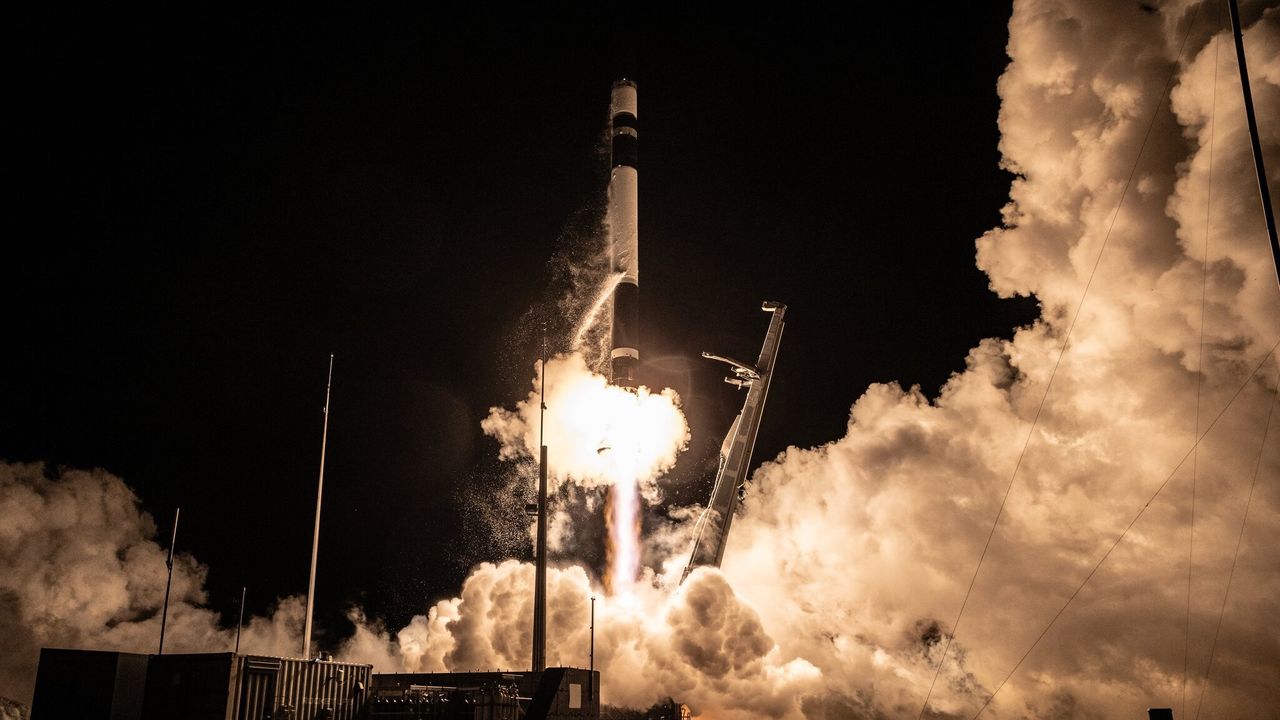
A private aerospace company successfully launches a high-tech Japanese Earth-observation satellite into orbit from its New Zealand launch facility early in the morning on August 6. The Electron rocket lifts off at 9:18 p.m. local time, carrying the advanced radar spacecraft for Tokyo-based imaging firm iQPS. This successful mission comes after a five-week delay caused by a last-second launch abort during a previous attempt in late June, bringing relief to the mission teams who worked diligently to resolve the undisclosed technical issues.
Dubbed "The Grain Goddess Provides," the mission successfully deploys the satellite, officially named MIKURA-I, into its designated circular orbit approximately 357 miles above Earth. The spacecraft utilizes high-resolution synthetic aperture radar technology, which allows it to peer through dense cloud cover and capture detailed imagery of the planet's surface during both day and night. This advanced capability ensures continuous, uninterrupted monitoring of environmental, agricultural, and structural changes on Earth under any weather conditions.
The newly launched satellite represents a crucial piece of a larger puzzle for iQPS, which is actively assembling a constellation of 36 identical radar satellites in low Earth orbit. This launch marks the eighth of fifteen scheduled flights contracted with the launch provider to build out the global monitoring network. The partnership highlights the growing reliance of commercial satellite operators on dedicated small-satellite launchers to establish rapid-response orbital infrastructure and maintain precise orbital spacing.
This mission marks the 92nd flight overall for the booster, cementing its status as a reliable workhorse in the highly competitive small-satellite launch market. Beyond its standard orbital services, the launch provider is diversifying its portfolio with a suborbital variant known as HASTE. This specialized vehicle allows defense and commercial clients to test advanced technologies in hypersonic flight environments, expanding the company's operational capabilities and attracting a broader range of government customers.
The expanding utility of these launch platforms is driving significant commercial and military interest, highlighted by a recent 266-million-dollar contract with the United States Space Force. Under this agreement, the launch provider will execute up to 18 suborbital missile-defense test flights. This partnership not only validates the company's technology but also establishes a new operational footprint in Alaska, broadening its geographical reach and strategic utility for national security operations.
Looking ahead, the successful deployment of MIKURA-I paves the way for a rapid succession of future launches to complete the radar constellation. As the launch provider prepares for its upcoming missions from both New Zealand and the United States, the global imaging market stands to benefit from unprecedented real-time Earth observation capabilities. The coming months will likely see an increased launch cadence, further accelerating the integration of space-based data into daily global commerce and environmental monitoring.
Originally reported by Space.com
What's Your Reaction?
 Like
0
Like
0
 Dislike
0
Dislike
0
 Love
0
Love
0
 Funny
0
Funny
0
 Angry
0
Angry
0
 Sad
0
Sad
0
 Wow
0
Wow
0