


















ISS Astronaut Captures Stunning Super Storm Photo From Space
NASA astronaut Anil Menon captured a breathtaking photo of Super Typhoon Dolphin from the ISS using an iPhone, showcasing the power of modern space photography.

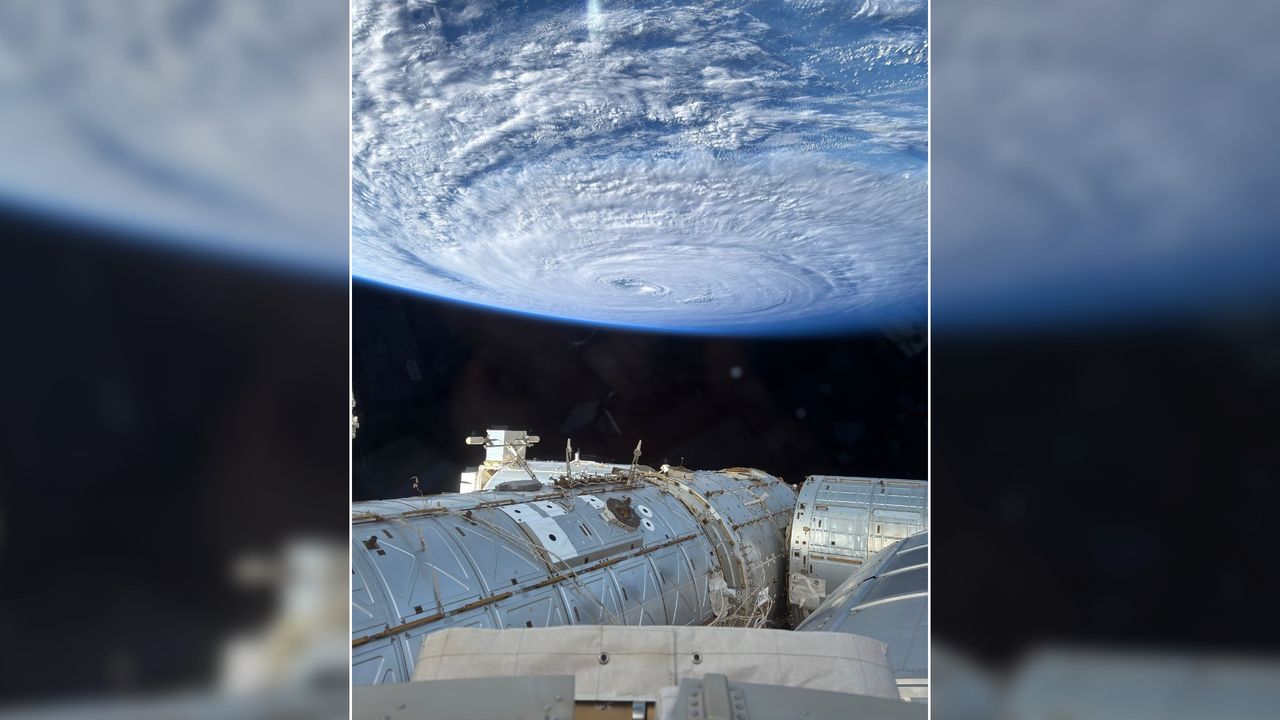
NASA astronaut Anil Menon captures a stunning photograph of a massive, swirling typhoon in the Pacific Ocean from the International Space Station on August 2, 2026. Peering through the windows of the orbital outpost, Menon uses a standard smartphone to document the colossal storm from his vantage point hundreds of miles above Earth. The striking image showcases the immense scale of the weather system as it spins across the open ocean, highlighting the unique perspective available only from low Earth orbit.
The storm captured in the image appears to be Super Typhoon Dolphin, which recently peaked as a powerful Category 5 tropical cyclone. Although the tempest has since weakened to a Category 3 storm, it continues its westward march toward Japan's Okinawa island, where meteorologists expect it to degrade further to a Category 1 or 2 system. Menon snaps the high-resolution photo from the space station's cupola, a specialized observatory module built by the European Space Agency that features six trapezoidal side windows and a large circular top window, offering unparalleled panoramic views of the planet below.
This orbital laboratory, roughly the size of a football field, has maintained a continuous human presence since the year 2000. Operating at an average altitude of 250 miles, the station hurtles through space at a staggering speed of 17,500 miles per hour, completing a full orbit of Earth every 90 minutes. Currently home to an international crew of seven astronauts, the facility serves as a crucial hub for groundbreaking scientific research, utilizing its unique microgravity environment to conduct experiments that are impossible to replicate on the ground.
The snapshot also highlights the rapid evolution of space photography, demonstrating how off-the-shelf consumer technology now rivals professional aerospace imaging equipment. Modern astronauts frequently rely on mobile devices to document their missions and share their experiences with the public. During the recent Artemis II lunar flyby mission, crew members utilized similar smartphone technology to beam back high-definition images of their journey, even using the devices' front-facing cameras as makeshift mirrors during their daily routines in deep space.
Beyond their scientific utility, these easily shareable images foster a profound connection between humanity and the cosmos, offering a stark reminder of both Earth's vulnerability and the sheer power of its natural systems. The ability to instantly transmit such vivid depictions of extreme weather events enhances global awareness of climate patterns and storm progression. Furthermore, the successful operation of the space station stands as one of humanity's greatest engineering triumphs, showcasing decades of peaceful international cooperation in the harsh environment of space.
However, the era of this iconic orbital platform is drawing to a close as the aging structure nears the end of its operational lifespan. Space agencies are already preparing for the next chapter of space exploration, which involves transitioning to commercial space stations. Current retirement schedules dictate that the International Space Station will be safely decommissioned and guided to a controlled watery grave in the Pacific Ocean around 2030, marking the end of a historic epoch in human spaceflight while paving the way for future lunar and Martian endeavors.
Originally reported by Space.com
What's Your Reaction?
 Like
0
Like
0
 Dislike
0
Dislike
0
 Love
0
Love
0
 Funny
0
Funny
0
 Angry
0
Angry
0
 Sad
0
Sad
0
 Wow
0
Wow
0