






















Rocket Lab Launches Japanese Radar Satellite After Delay
Rocket Lab successfully launched a Japanese Earth-observing radar satellite aboard an Electron rocket from New Zealand following a five-week delay.

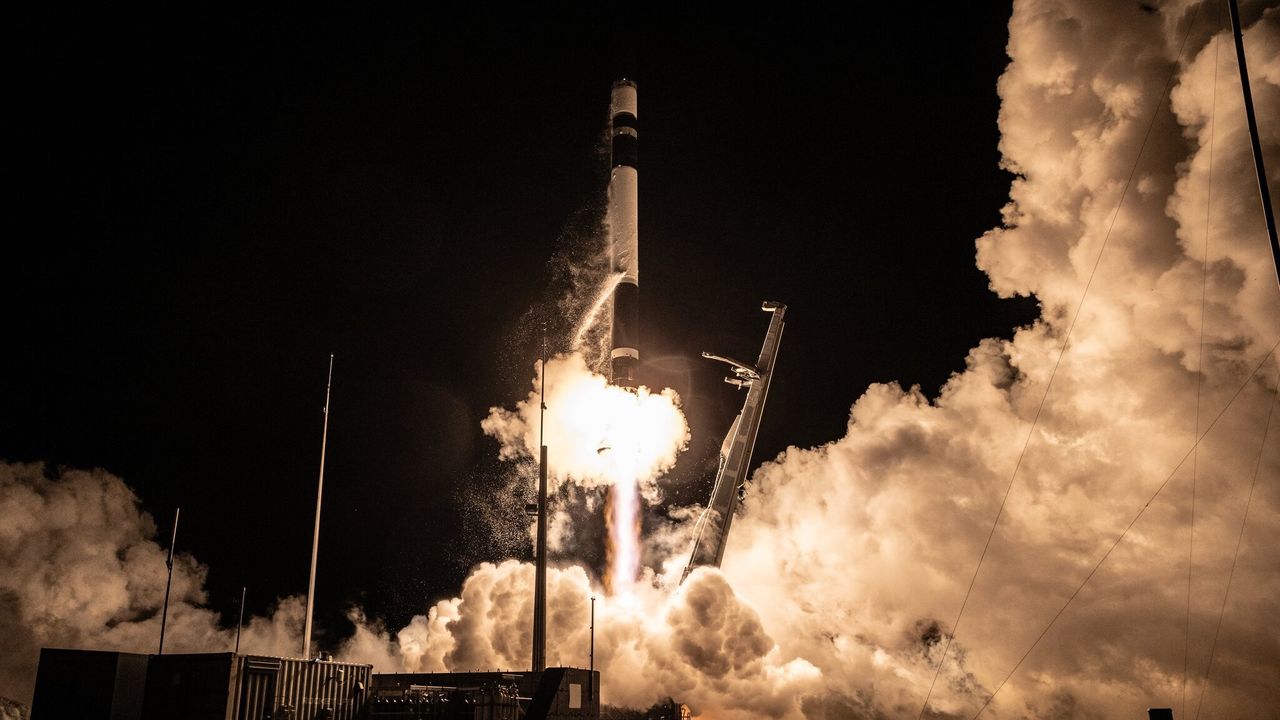
Rocket Lab successfully launches a Japanese Earth-observation satellite into orbit from its New Zealand launch complex on August 6, overcoming a five-week delay. The company's signature Electron rocket lifts off at 9:18 p.m. local time, carrying the advanced radar spacecraft for Tokyo-based space technology firm iQPS. This successful deployment marks a crucial milestone for the mission, which finally reaches space after a sudden, last-second abort halted the initial launch attempt earlier this summer.
The newly deployed satellite, named MIKURA-I, now operates in its target circular orbit approximately 357 miles above Earth. Equipped with high-resolution synthetic aperture radar technology, the spacecraft can penetrate dense cloud cover and collect detailed imagery during both day and night. This successful orbital insertion comes as a relief after a June 30 launch attempt was abruptly canceled in the final second of the countdown, though the specific technical issue that triggered the abort remains undisclosed.
The mission represents a major step forward for iQPS as the company works to assemble a massive constellation of 36 Earth-imaging satellites in low Earth orbit. Rocket Lab serves as the primary launch provider for this orbital network, and this flight marks the eighth of fifteen planned launches dedicated to building the constellation. Additionally, the mission represents Rocket Lab's 92nd flight overall and its 13th launch of the year, highlighting the company's rapid operational tempo.
While the 59-foot-tall Electron rocket continues to serve as the company's primary workhorse for commercial satellite deployments, Rocket Lab is actively expanding its aerospace portfolio. The company is experiencing growing demand for HASTE, a specialized suborbital variant of the Electron rocket designed to test advanced technologies in hypersonic flight environments. This technological expansion is further supported by a recent 266-million-dollar contract with the United States Space Force to conduct up to 18 suborbital missile-defense test flights from a new launch site in Alaska.
The successful addition of MIKURA-I to the growing satellite network significantly enhances global imaging capabilities, providing critical, all-weather data that is invaluable for environmental monitoring and disaster response. For iQPS, expanding this constellation ensures more frequent coverage of specific geographical areas, allowing clients to track changes on the ground in near-real-time. For Rocket Lab, the flawless execution of this delayed mission reinforces its reputation as a highly reliable partner in the competitive small-satellite launch market.
Looking to the future, both organizations are positioned to maintain this strong momentum as they execute their respective long-term expansion plans. Rocket Lab is scheduled to conduct seven more launches to complete the iQPS radar constellation while simultaneously preparing for its upcoming military test flights in the subarctic. As the global demand for persistent, round-the-clock orbital surveillance continues to rise, the completed 36-satellite network will soon deliver unprecedented, continuous views of our dynamic planet.
Originally reported by Space.com
What's Your Reaction?
 Like
0
Like
0
 Dislike
0
Dislike
0
 Love
0
Love
0
 Funny
0
Funny
0
 Angry
0
Angry
0
 Sad
0
Sad
0
 Wow
0
Wow
0