





















Mata Hari: The Legend of the Belle Époque Dancer and Spy
Discover the true story of Mata Hari, the Dutch dancer who took Belle Époque Paris by storm with her exotic lies, seductive dances, and legendary spy secrets.

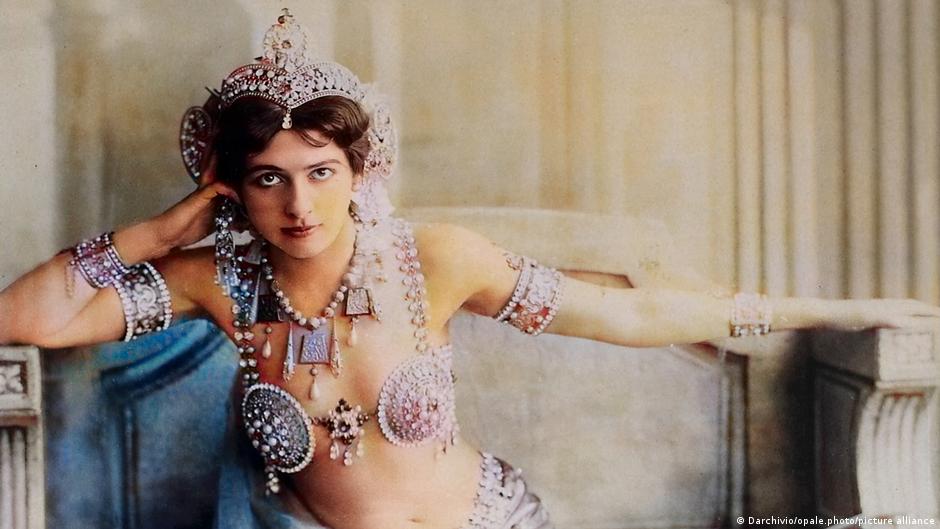
A mysterious dancer captivates Paris high society in 1905, shedding veils and social conventions to become an overnight sensation. Performing as Mata Hari, this enigmatic woman mesmerizes audiences with daring, near-naked routines that she claims are sacred temple dances. While she convinces the French capital that she is an exotic Indian princess, she is actually Margaretha Geertruida Zelle, a desperate Dutch woman fleeing a tragic past. This bold reinvention marks the birth of a legend, blending sensuality and deception at the height of the Belle Époque.
To sustain her lucrative illusion, the performer crafts an elaborate backstory, claiming to be the daughter of a sacred dancer from the Ranganathaswamy Temple who died in childbirth. She tells rapt onlookers that temple priests raised her and named her Mata Hari, a Malay phrase translating to "Eye of the Day." Her performances feature a slow stripping away of jewel-encrusted bustiers and colorful veils, leaving her almost entirely nude. Despite her massive success, she privately admits that her fame stems not from technical talent, but from her unprecedented willingness to appear unclothed.
Before her Parisian triumph, the dancer leads a tumultuous life far removed from the glamour of the stage. Born in the quiet Dutch town of Leeuwarden in 1876, she is the pampered daughter of a wealthy hatmaker who later loses his fortune. Left impoverished as a teenager, she answers a newspaper personal advertisement to marry John Rudolf MacLeod, a military officer twenty years her senior. Their subsequent relocation to the Dutch East Indies brings only misery, marked by constant domestic conflict and the tragic poisoning death of their infant son.
Cultural analysts view her rapid rise as a direct result of Europe's intense fascination with Eastern cultures during the early twentieth century. This era of romanticized exoticism creates a perfect environment for her elaborate deception, as wealthy patrons eagerly accept her fabricated heritage without scrutiny. Her transformation from a destitute divorced mother into an international icon highlights the power of self-reinvention in a rigid society. By exploiting the colonial fantasies of the era, she secures financial survival and a position of immense social influence.
The impact of her performances extends far beyond the theater, challenging the strict moral boundaries of the era. By redefining public nudity as high art, she paves the way for modern expressive dance and alters the landscape of popular entertainment. Her dual existence as both a celebrated artist and a calculated imposter exposes the superficiality of high society, which embraces her only when she wears the mask of an exotic foreigner. This daring act of survival cements her status as a cultural pioneer.
As her fame spreads across Europe, the line between her stage persona and her real identity continues to blur, setting the stage for a legacy shrouded in mystery. The name Mata Hari will forever remain synonymous with seduction, intrigue, and the art of illusion. While her immediate future holds escalating drama and geopolitical complications, her enduring historical footprint is already secure. She transitions from a flesh-and-blood performer into an immortal symbol of the femme fatale, ensuring her captivating dance of deception will fascinate the world forever.
Originally reported by DW News
What's Your Reaction?
 Like
0
Like
0
 Dislike
0
Dislike
0
 Love
0
Love
0
 Funny
0
Funny
0
 Angry
0
Angry
0
 Sad
0
Sad
0
 Wow
0
Wow
0