













Watch Rocket Lab Launch Japanese Earth-Observing Satellite Today
Watch Rocket Lab launch the SUSANOO-II radar satellite for Japan's iQPS today. Stream the Electron rocket's "The Lightning God Defends" mission live.

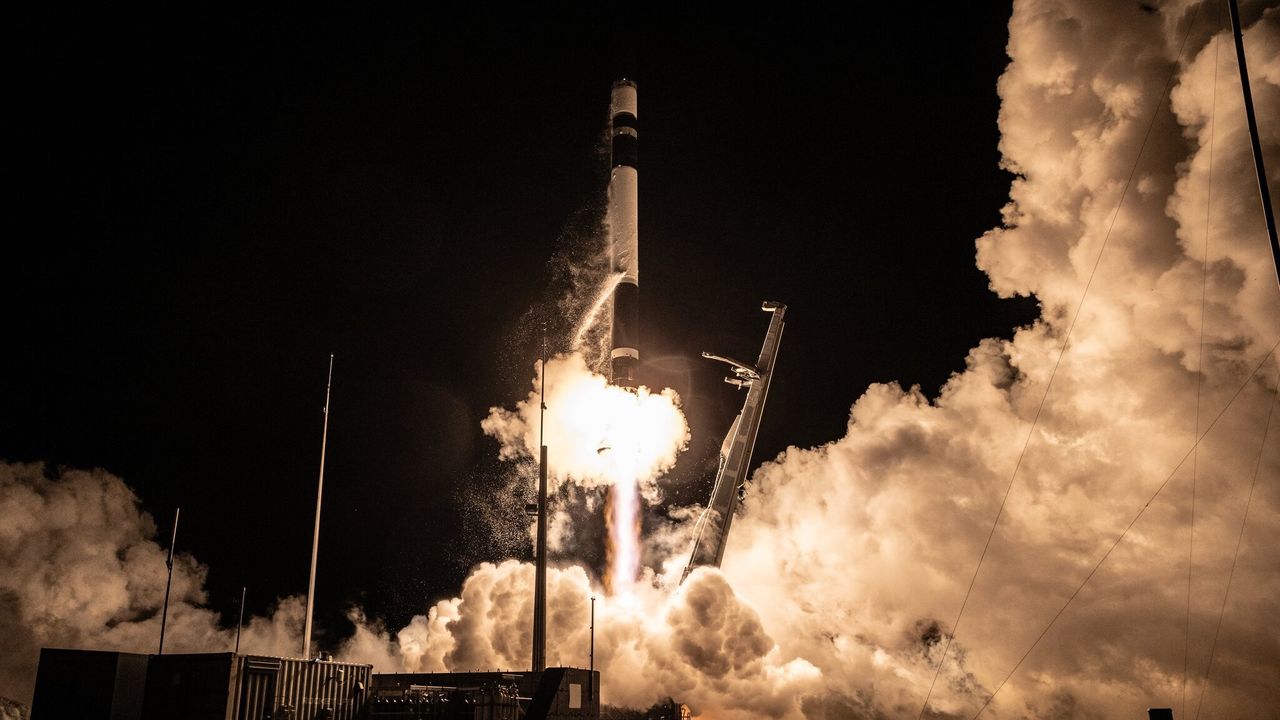
Rocket Lab prepares to launch a private Japanese Earth-observation satellite into orbit today, August 20, from its launch facility on the Mahia Peninsula of New Zealand. An Electron rocket is scheduled to lift off during a window opening at 9:00 a.m. EDT (1300 GMT), carrying a high-tech radar spacecraft for the Tokyo-based space technology company iQPS. The mission, named "The Lightning God Defends," will be broadcast live online for global audiences starting approximately thirty minutes before the scheduled ignition.
The primary payload for this flight is SUSANOO-II, a sophisticated synthetic aperture radar satellite named after a Japanese deity of storms and lightning. If the launch proceeds as scheduled, the Electron rocket's upper "kick stage" will deploy the satellite into its target low Earth orbit approximately 50 minutes after liftoff. The spacecraft will operate at an altitude of roughly 357 miles (575 kilometers) above Earth, where it will immediately begin its orbital checkout procedures.
This mission represents a continuation of a highly active year for Rocket Lab, marking its 14th launch of 2026 and its 93rd flight overall. It also stands as the ninth dedicated launch the company has conducted for iQPS, following a successful mission for the same client just weeks earlier on August 6. The workhorse for these missions is the 59-foot-tall Electron booster, a lightweight rocket designed specifically to provide dedicated, flexible orbital access for small-satellite operators.
The Tokyo-based satellite operator is aggressively expanding its capabilities, utilizing these frequent launches to construct a planned 36-satellite constellation in low Earth orbit. Unlike traditional optical imaging satellites, these synthetic aperture radar spacecraft can capture high-resolution imagery of the ground during both day and night, effortlessly piercing through thick cloud cover and adverse weather conditions. To support diverse aerospace needs, Rocket Lab also maintains a suborbital variant of its core rocket, known as HASTE, which allows customers to conduct critical sensor testing in hypersonic environments.
The rapid deployment of this orbital network significantly enhances global monitoring capabilities, providing near-real-time, high-resolution data to commercial and governmental users worldwide. By maintaining a rapid launch cadence, Rocket Lab demonstrates the viability of responsive space access, allowing satellite operators to quickly replace assets or scale up their constellations. This consistent reliability is crucial for industries relying on timely geospatial intelligence for disaster response, maritime tracking, and environmental monitoring.
Looking ahead, both companies are poised to deepen their partnership as iQPS moves closer to fully realizing its 36-satellite orbital network. Rocket Lab continues to solidify its position as a leading provider of small-satellite launches, with an increasingly packed manifest for the remainder of the year and beyond. As the demand for persistent, all-weather Earth observation grows, the success of today's mission paves the way for a new era of rapid-response space operations and continuous global surveillance.
Originally reported by Space.com
What's Your Reaction?
 Like
0
Like
0
 Dislike
0
Dislike
0
 Love
0
Love
0
 Funny
0
Funny
0
 Angry
0
Angry
0
 Sad
0
Sad
0
 Wow
0
Wow
0