













LG's New FLiPP OLED Tech Makes Displays Brighter and Larger
LG's revolutionary FLiPP manufacturing technology eliminates metal masks to create OLED displays that are 1.6 times brighter and last much longer.

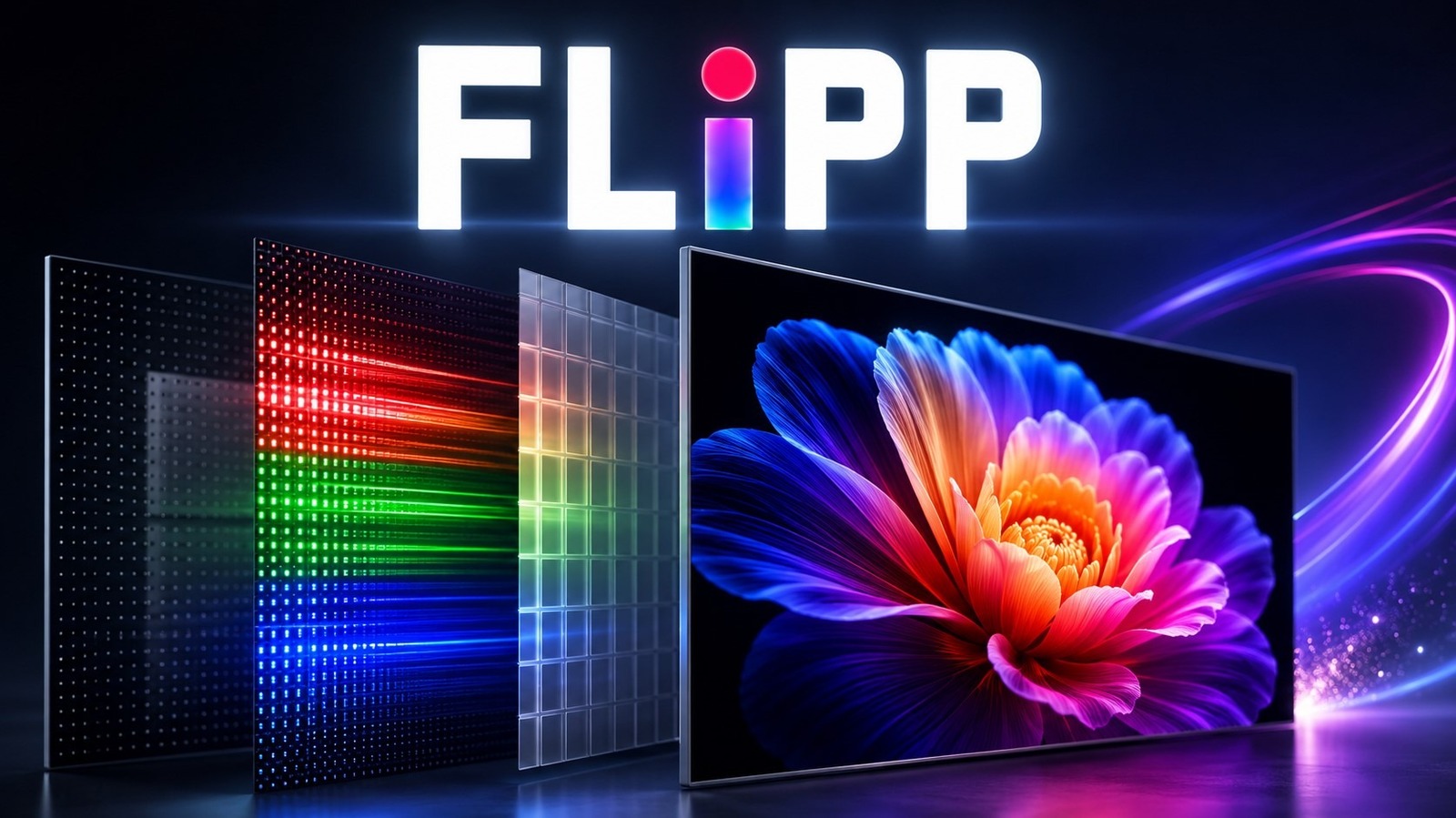
South Korean display pioneer LG unveils a groundbreaking manufacturing method called FMM-less Innovative Pixel Patterning, or FLiPP, which promises to redefine the production of organic light-emitting diode panels. This new fabrication process eliminates traditional manufacturing bottlenecks, enabling the creation of brighter, sharper, and significantly more durable screens. By discarding decades-old limitations, the technology scales seamlessly across a vast array of devices, ranging from compact virtual reality headsets to massive living room televisions. The announcement marks a major leap forward in display engineering, promising immediate improvements in screen performance and efficiency.
At the heart of this innovation lies a shift in how subpixels are deposited onto the display substrate. The FLiPP system bypasses the conventional reliance on physical stencils, choosing instead to apply red, green, and blue pixels directly onto the panel in a highly precise sequence. Once the organic materials are in place, the system utilizes advanced photolithography and ultraviolet light to cleanly erase any excess material. This precise chemical and light-based patterning ensures pristine pixel boundaries, resulting in a flawless display grid that maximizes light output while minimizing manufacturing errors.
Historically, OLED fabrication relies on fine metal masks, which are thin sheets of metal perforated with millions of microscopic holes. These masks act as physical templates to guide the organic materials onto the glass substrate. However, this traditional method introduces severe physical constraints. The metal plates are incredibly expensive to produce and highly delicate to handle. As display sizes increase, these masks tend to sag under their own weight, causing alignment errors that ruin entire batches of screens and drive up production costs.
Removing these physical masks yields immediate, quantifiable performance upgrades. Displays manufactured with the new process achieve a 1.6-fold increase in brightness and more than double their operational lifespan, lasting 2.4 times longer than conventional screens. Simultaneously, these panels consume 13 percent less power, addressing a critical pain point for battery-dependent mobile devices. Production efficiency also sees a massive boost, with tests showing a 64 percent increase in glass substrate utilization during laptop panel manufacturing, which drastically reduces raw material waste.
The economic and practical implications of this technological shift are profound. By maximizing the usable area of each sheet of mother glass, manufacturers can significantly lower the retail cost of high-end displays while boosting overall factory output. Furthermore, because the process is entirely free from the physical constraints of metal templates, it offers unprecedented scalability. Designers can now apply the exact same high-efficiency pixel structure to ultra-dense one-inch wearable displays and giant home theater screens alike, streamlining the entire supply chain.
Looking ahead, the transition from laboratory breakthrough to commercial reality is already underway. Initial production plans focus on integrating these advanced panels into upcoming tablets and computer monitors. Once these medium-sized applications stabilize, production will expand to encompass everything from miniature smartwatch screens to ultra-large premium televisions. While a definitive consumer release date remains unannounced, this manufacturing revolution is poised to quietly upgrade the screens in our pockets and on our walls in the very near future.
Originally reported by Engadget
What's Your Reaction?
 Like
0
Like
0
 Dislike
0
Dislike
0
 Love
0
Love
0
 Funny
0
Funny
0
 Angry
0
Angry
0
 Sad
0
Sad
0
 Wow
0
Wow
0