
.jpg)
















Pakistan Kashmir Protests: Inside the Deadly Rawalakot Clashes
Inside Pakistan-administered Kashmir, a makeshift clinic struggles to treat protesters shot during deadly clashes amid rising tensions and local elections.

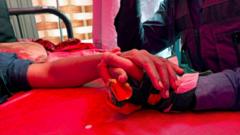
Violent clashes between security forces and demonstrators in Rawalakot, Pakistan-administered Kashmir, escalate during regional elections, leaving dozens dead and scores wounded over the past two months. Members of the Joint Awami Action Committee face live ammunition as they protest for basic economic rights, turning the disputed territory into a flashpoint of civil unrest. In the heart of the city, under-resourced makeshift clinics struggle to treat critically injured young protesters who are too terrified to seek help at government hospitals.
Inside a covert residential clinic near the main protest site, a local physician operating under a pseudonym treats a continuous influx of severely wounded patients. On a blood-stained bed beneath a plastic canopy, a young man named Shafqat Hussain fights for his life after taking a bullet to the chest. The clinic has treated dozens of critically injured patients, mostly young men between the ages of 15 and 35 suffering from gunshot wounds. Because protesters fear arrest or further violence at state-run hospitals, they rely on these makeshift centers, which lack the advanced surgical equipment necessary to treat life-threatening trauma.
The unrest stems from deep-seated economic grievances, with the group demanding affordable wheat flour, subsidized electricity, and better public services. Although the regional and federal governments signed an agreement with the protesters last October to address these issues, organizers argue the state has failed to implement any of the promised reforms. In response, the government banned the group in June, labeling them as foreign-funded agitators intent on disrupting the ongoing democratic polls. Officials deny targeting peaceful citizens, claiming instead that the demonstrators are armed and seeking to destabilize the region.
Medical professionals on the ground warn that even the region's major hospitals would collapse under the sheer volume of trauma patients if the violence continues. While authorities dismiss claims that injured protesters face arrest at public hospitals, security forces have actively blocked major transit routes to prevent demonstrators from marching toward the regional capital of Muzaffarabad. This blockade further isolates the wounded, cutting off access to specialized emergency care and forcing local volunteers to perform high-stakes triage with basic first-aid kits.
The human toll of the crackdown is devastating local communities, where families are mourning a generation of young breadwinners. At the bedsides of the wounded, grieving relatives question the state's use of lethal force against citizens demanding basic survival needs. The high number of casualties among teenagers and young adults highlights the growing desperation of a youth population trapped between economic stagnation and political repression. This heavy-handed response has only deepened the alienation of the local population from the central administration.
As the regional elections proceed under heavy security, the prospects for a peaceful resolution remain bleak. Protesters vow to continue their resistance, rejecting government accusations of foreign sponsorship and insisting on their right to peaceful assembly. Without a genuine effort from the government to honor past agreements and address the soaring cost of living, the cycle of protests and violent crackdowns is likely to intensify, pushing this volatile border region further into chaos.
Originally reported by BBC World
What's Your Reaction?
 Like
0
Like
0
 Dislike
0
Dislike
0
 Love
0
Love
0
 Funny
0
Funny
0
 Angry
0
Angry
0
 Sad
0
Sad
0
 Wow
0
Wow
0