
.jpg)
















Apple Claims More Former Employees Leaked Secrets to OpenAI
Apple seeks expedited discovery in its lawsuit against OpenAI, claiming 11 more former employees may have leaked trade secrets about unannounced products.

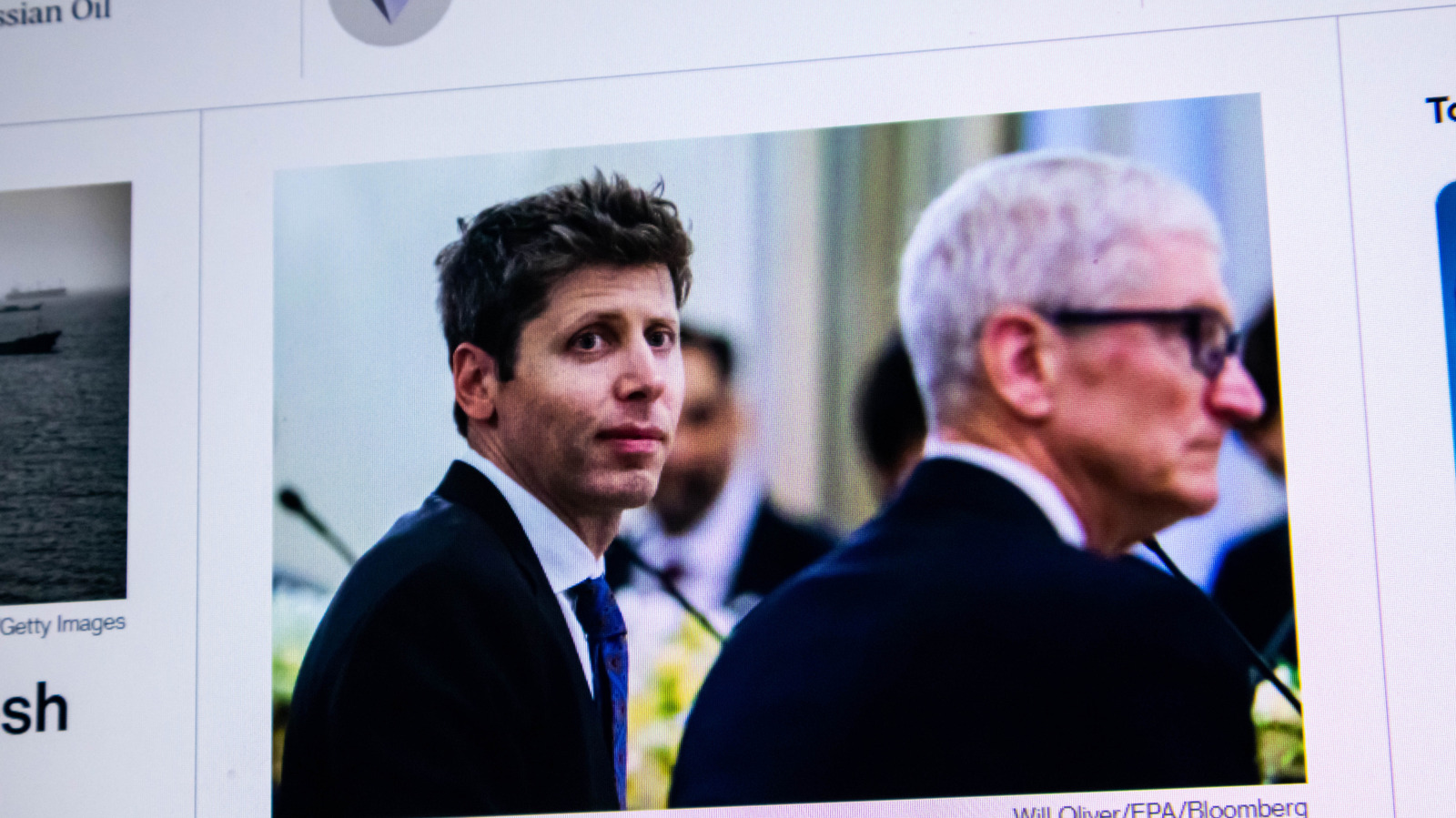
Apple is aggressively escalating its legal battle against OpenAI by demanding an immediate halt to the startup's hardware development and requesting expedited discovery in court. The tech giant claims that a widening circle of former employees systematically transferred proprietary trade secrets to the artificial intelligence firm. This dramatic move seeks a preliminary injunction to block OpenAI from advancing any physical devices that potentially leverage stolen Apple technology, marking a major flashpoint in the race for AI-powered consumer hardware.
Internal investigations at Apple point to at least 11 additional former staff members who allegedly witnessed or participated in the intellectual property drain. Newly submitted court documents detail suspicious activities, including an employee who reportedly photographed confidential documents concerning unannounced products just prior to interviewing with OpenAI. Another former worker allegedly met with a previously accused engineer to discuss unreleased Apple designs, while several others who transitioned to OpenAI recently contacted Apple to return company-issued devices they had kept long after their departure.
The legal dispute initially centered on Chang Liu, a former senior systems electrical engineer, and Tang Yew Tan, a former vice president, both of whom Apple accused of funneling sensitive data to OpenAI. The conflict deepens amid persistent rumors that OpenAI is developing a revolutionary AI-powered smart speaker in collaboration with legendary former Apple designer Jony Ive. OpenAI recently acquired Ive's startup, io Products, for a staggering $6.5 billion, dragging that newly absorbed entity into the litigation as a co-defendant.
OpenAI is fighting back fiercely, dismissing the injunction request as an unnecessary measure built on entirely fabricated claims. The AI firm maintains that it has zero interest in acquiring or utilizing Apple's proprietary technology. To support its defense, OpenAI released text messages showing Apple staff contacting a departed engineer to ask where certain files were located, arguing that the dispute stems from Apple's own failure to secure its networks and properly revoke system access when employees resign.
The outcome of this legal clash carries immense consequences for the future of consumer technology. If the court grants Apple's request for a preliminary injunction, it could freeze OpenAI's hardware ambitions in their tracks, stalling a highly anticipated product launch that could redefine the smart home market. Furthermore, this case highlights the intensifying talent war in Silicon Valley, where the boundaries of intellectual property are increasingly tested as tech behemoths and AI startups scramble to dominate the next generation of computing.
As the federal court weighs the request for expedited discovery, both companies are preparing for a protracted and highly publicized legal war. A ruling in Apple's favor would force OpenAI to open its internal databases and communications for immediate scrutiny, potentially exposing sensitive development timelines. Regardless of the immediate judicial outcome, this battle signals a permanent rift between the former allies and sets a precedent for how proprietary hardware designs are guarded in the rapidly evolving age of artificial intelligence.
Originally reported by Engadget
What's Your Reaction?
 Like
0
Like
0
 Dislike
0
Dislike
0
 Love
0
Love
0
 Funny
0
Funny
0
 Angry
0
Angry
0
 Sad
0
Sad
0
 Wow
0
Wow
0