



















SpaceX Q2 Earnings: First Report Since IPO as Stock Plummets
SpaceX prepares to release its first earnings report since its June IPO. With shares down 24% and jittery investors, here is what Wall Street expects.


SpaceX prepares to release its highly anticipated fiscal second-quarter financial results on Tuesday afternoon, marking the private-turned-public space giant's first earnings report since its historic June initial public offering. The high-stakes announcement, followed by an investor conference call at 4:30 p.m. Eastern Time, represents a critical milestone as Elon Musk’s rocket manufacturing and satellite communications enterprise faces public market scrutiny for the first time.
Wall Street approaches the disclosure with intense anxiety following a turbulent start to SpaceX's public trading life. Since debuting at $150 per share on June 12, the stock has plummeted by 24 percent, erasing nearly $500 billion in market capitalization and sitting roughly 50 percent below its mid-June peak. This volatility stems from a massive $4.9 billion net loss last year, driven primarily by heavy capital expenditures, alongside the revelation that even the company's core rocket launch division remains unprofitable despite lucrative government contracts.
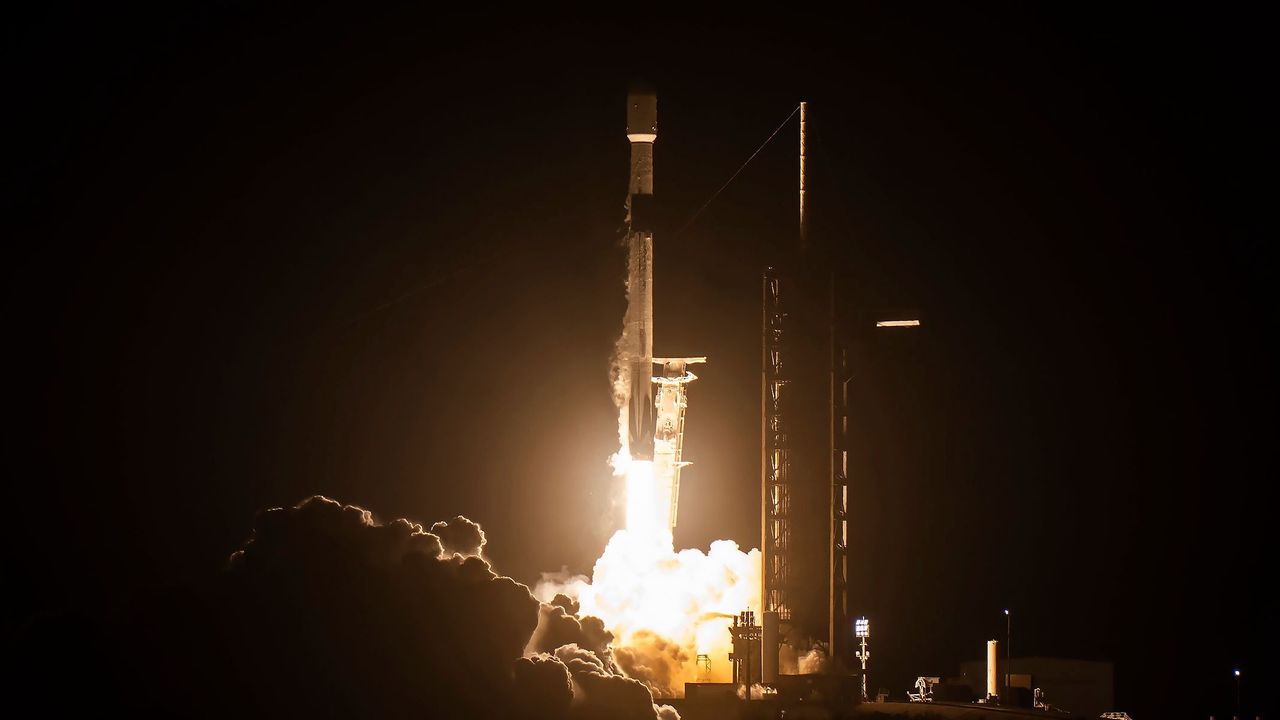
The financial strain traces back to a strategic pivot in February, when SpaceX merged with Musk's artificial intelligence venture, xAI, to pursue an ambitious vision of building orbital data centers. While this capital-intensive AI expansion drains cash, the company's sole profitable engine remains Starlink, its satellite internet division that services consumer, enterprise, and military clients. Meanwhile, the core launch business faces capacity constraints, with booking reservations already closed through late 2028 as the company prioritizes deploying its own Starlink network.
Industry analysts focus heavily on how SpaceX intends to monetize its massive computing investments to compete with established artificial intelligence leaders. Recent high-profile partnerships offer a glimpse into this strategy, including a massive $920 million monthly agreement with Google for AI capacity and a $150 million monthly deal with Reflection AI to supply advanced graphics processors. Additionally, a sweeping agreement with Anthropic secures the entirety of SpaceX's computing power at its Tennessee-based data center, proving the company can generate immediate revenue from its hardware.
These multi-million-dollar cloud and AI deals signify a dramatic shift in SpaceX's identity from a pure-play aerospace manufacturer to a diversified technology infrastructure provider. However, this transition introduces significant execution risks and pits the company directly against trillion-dollar cloud giants like Amazon, Microsoft, and Google. Investors remain divided on whether these computing contracts represent a temporary cash-flow fix to offset launch deficits or a viable, long-term business model capable of sustaining the company's premium valuation.
Looking ahead, the company's trajectory hinges on the development timeline of its massive Starship rocket and its ability to balance internal launch needs with commercial demand. If Starship encounters further regulatory or technical delays, SpaceX must decide how to accommodate external customers on its older, active launch vehicles without disrupting Starlink's expansion. Tuesday’s financial results and subsequent executive commentary will ultimately determine whether the company can restore shareholder confidence and stabilize its rocky stock performance.
Originally reported by CNBC
What's Your Reaction?
 Like
0
Like
0
 Dislike
0
Dislike
0
 Love
0
Love
0
 Funny
0
Funny
0
 Angry
0
Angry
0
 Sad
0
Sad
0
 Wow
0
Wow
0