















Iran Denies US Talks as Trump Claims Negotiations Are Underway
Iran denies holding direct talks with the US despite Donald Trump's claims, confirming negotiations only with Oman to reopen the vital Strait of Hormuz.


United States President Donald Trump halts a massive military strike against Iran on Monday, claiming that crucial negotiations to end the conflict and reopen the Strait of Hormuz are underway. While Washington insists that a diplomatic breakthrough is imminent, Tehran publicly rejects any direct talks with the American administration. This sudden pause in military action follows intense pressure from Middle Eastern allies who urge restraint in hopes of securing a lasting peace agreement.
The diplomatic standoff intensifies as Trump accuses Iranian leaders of being highly deceptive regarding their willingness to negotiate. Despite Tehran's denials, the American president maintains that backchannel discussions are actively occurring and warns that this represents Iran's final opportunity to sign a favorable treaty. Meanwhile, Iranian officials confirm they are negotiating exclusively with Oman to establish a temporary safe passage for commercial vessels through the blockaded strait, bypassing direct contact with the United States.
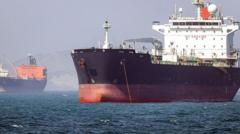
The current crisis stems from a conflict that erupted in late February following a series of military strikes by the United States and Israel against Iranian targets. In response, Tehran repeatedly closed the Strait of Hormuz, a vital maritime chokepoint that handles a massive portion of the world's energy supplies. Although a temporary ceasefire in April offered brief respite, those talks collapsed last month, leading to a resumption of hostilities and a renewed blockade of the shipping lane.
The threat of military escalation and the closure of the strait have severely disrupted global energy markets and maritime logistics. Recent tracking data reveals that commercial shipping traffic through the waterway has plunged by nearly twenty-eight percent, with vessel crossings dropping significantly over a four-day period. However, the news of a potential diplomatic resolution immediately eases market anxieties, causing global oil prices to tumble by more than four percent on Monday morning.
This high-stakes standoff carries immense significance for global energy security and regional stability in the Middle East. Major regional powers, including Saudi Arabia, the United Arab Emirates, and Qatar, play a pivotal role in de-escalating the situation by actively advising against American military strikes. Their intervention highlights a collective regional desire to avoid a devastating wider war that could permanently damage global fuel supplies and economic infrastructure.
Looking ahead, the prospects for a comprehensive peace deal remain highly uncertain as both sides send conflicting signals. While the United States remains poised to launch military operations at any moment if talks fail, the focus remains on securing a permanent agreement regarding both maritime transit and nuclear capabilities. The coming days will determine whether Oman's mediation can bridge the gap between Washington and Tehran, or if the region will slide back into active combat.
Originally reported by BBC World
What's Your Reaction?
 Like
0
Like
0
 Dislike
0
Dislike
0
 Love
0
Love
0
 Funny
0
Funny
0
 Angry
0
Angry
0
 Sad
0
Sad
0
 Wow
0
Wow
0