





















Odesa Russia Strikes: Port Workers Face Deadly Black Sea Attacks
Russian missile and drone strikes devastate Ukraine's Black Sea ports in Odesa, killing workers and halting trade. Read the harrowing stories from survivors.

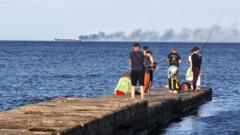
Russian military forces are intensifying a devastating campaign of missile and drone strikes against Ukraine's critical Black Sea ports, systematically crippling the nation's maritime trade and killing civilian workers. Over the past several weeks, relentless bombardments have targeted key shipping hubs including Odesa, Chornomorsk, and Pivdennyi. This aggressive offensive is disabling vital infrastructure, sinking merchant vessels, and effectively halting the flow of agricultural exports to the global market.
The scale of the destruction is unprecedented, with recent data revealing dozens of targeted strikes on civilian vessels and port facilities within a single month. In one of the deadliest incidents, three Russian missiles struck a Turkish-owned cargo ship carrying Ukrainian corn, killing nine foreign crew members and a Ukrainian pilot before the vessel sank. On land, port employees face constant peril; warehouse managers and crane operators work under the threat of shrapnel and explosions, with many suffering severe injuries or losing colleagues in sudden, localized blasts that leave workspace structures smoldering and ruined.
Since the launch of the full-scale invasion, Russia has consistently sought to sever Ukraine's economic lifelines by controlling or disrupting its access to international waters. The Black Sea serves as the primary corridor for Ukrainian grain and agricultural goods, which are essential for global food security. While previous phases of the conflict saw sporadic interference with shipping, the current strategy represents a deliberate escalation aimed at total economic strangulation, transforming once-bustling maritime terminals into silent, vacant stretches of idle machinery.
Maritime safety experts now classify the Black Sea as the most hazardous shipping environment in the world. The extreme danger is compounded by the geographic proximity of Russian-occupied Crimea, which allows missiles to reach port targets in less than sixty seconds. This rapid flight time leaves dockworkers, particularly those operating high-altitude gantry cranes, with virtually no time to seek shelter, as evacuation procedures require several minutes. Consequently, labor representatives report that civilian port workers now face psychological strain comparable to active combat zones.
The immediate consequence of this relentless bombardment is the near-total paralysis of Ukraine's maritime export economy. Hundreds of meters of berths sit entirely empty, and massive gantry cranes stand frozen against the horizon. International shipping companies are increasingly reluctant to risk their vessels and crews in these volatile waters, driving up insurance costs and forcing global trade to seek longer, more expensive alternative routes. This disruption threatens to reignite global food inflation and worsen shortages in vulnerable nations dependent on Ukrainian grain.
Looking ahead, the survival of Ukraine's maritime sector hinges on securing advanced air defense systems capable of intercepting incoming ballistic missiles and drones before they strike. Despite the immense physical and psychological toll, resilient port workers vow to maintain operations whenever possible to keep their country connected to the world. However, without robust international intervention to protect these shipping lanes, the Black Sea ports risk permanent closure, cementing a devastating economic blow to Ukraine and a prolonged crisis for global commerce.
Originally reported by BBC World
What's Your Reaction?
 Like
0
Like
0
 Dislike
0
Dislike
0
 Love
0
Love
0
 Funny
0
Funny
0
 Angry
0
Angry
0
 Sad
0
Sad
0
 Wow
0
Wow
0