


























Explosive Drone Targets Ukrainian Aircraft at German Airport
An explosive drone was discovered hovering near a parked Ukrainian cargo aircraft at Leipzig airport in Germany. Investigators suspect a Russian attack.

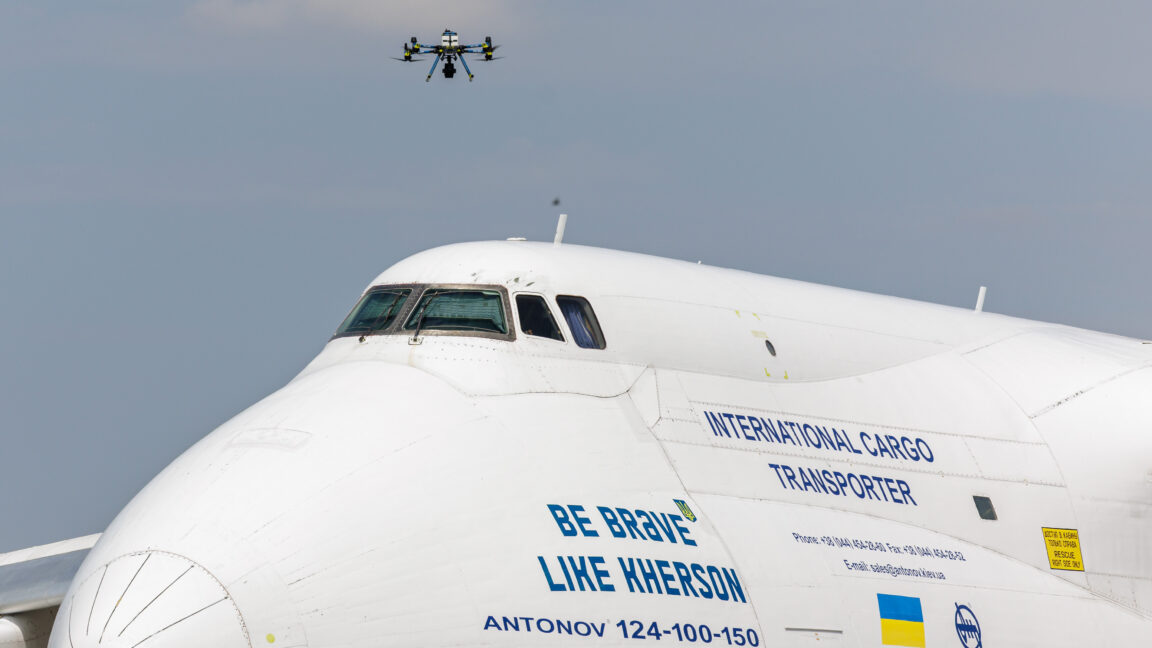
German security agencies launch a major investigation after an explosive-laden drone targets a parked cargo aircraft at Leipzig/Halle Airport, raising immediate suspicions of a state-sponsored sabotage attempt linked to Russia. The incident, which occurred during the quiet overnight hours at one of Europe's busiest air freight hubs, triggers a massive security alert and highlights the growing vulnerability of critical infrastructure to hostile unmanned aerial systems.
Detailed reports indicate that the drone, rigged with sophisticated military-grade explosives, managed to penetrate the airport's outer perimeter before positioning itself near a stationary freight plane. Security personnel fortunately detected the device before it could detonate, preventing what could have been a catastrophic explosion on the tarmac. Forensic teams are currently analyzing the wreckage of the drone, focusing on its guidance systems, payload composition, and telemetry data to trace its origin and launch point.
This alarming event follows a series of mysterious incidents and warnings across Europe regarding Russian hybrid warfare tactics. Over the past year, European intelligence agencies have repeatedly warned about Moscow's escalating campaign of sabotage, arson, and cyberattacks designed to destabilize Western nations supporting Ukraine. Leipzig/Halle Airport serves as a vital logistics hub, not only for commercial shipping giants but also for military transport and humanitarian aid shipments destined for Eastern Europe, making it a prime target for hostile actors seeking to disrupt these supply lines.
Aviation security experts warn that the use of weaponized commercial drones represents a paradigm shift in asymmetric threats against civilian infrastructure. Traditional airport defense systems, primarily designed to intercept manned aircraft or ground-based intruders, often struggle to detect and neutralize small, low-flying drones. This incident aligns with a broader pattern of GPS jamming and airspace disruptions near NATO's eastern flank, which defense analysts increasingly attribute to coordinated Russian electronic warfare operations designed to test Western vulnerabilities.
The thwarted attack sends shockwaves through the global aviation industry and significantly heightens geopolitical tensions between Berlin and Moscow. A successful detonation would have disrupted global supply chains, caused millions of dollars in damage, and potentially resulted in mass casualties among ground crews. Consequently, the event forces European governments to reassess their domestic security postures, recognizing that the shadow war between Russia and the West is increasingly spilling over into civilian spaces and critical transport networks.
Moving forward, airports across Europe are rapidly upgrading their defense mechanisms, investing heavily in advanced counter-drone technology, signal-jamming equipment, and enhanced radar surveillance. Governments are also preparing tougher regulatory frameworks and coordinated defense strategies to protect critical transport networks from future aerial threats. As the investigation in Leipzig continues to unfold, the international community braces for a prolonged era of heightened vigilance, where securing the skies above domestic airports is as critical as defending national borders.
Originally reported by Ars Technica
What's Your Reaction?
 Like
0
Like
0
 Dislike
0
Dislike
0
 Love
0
Love
0
 Funny
0
Funny
0
 Angry
0
Angry
0
 Sad
0
Sad
0
 Wow
0
Wow
0