



.jpg)

















Talon-A Hypersonic Vehicle Achieves Major Flight Milestone
Stratolaunch's reusable Talon-A hypersonic vehicle has completed over 10 successful flights, marking a major milestone for routine hypersonic testing.

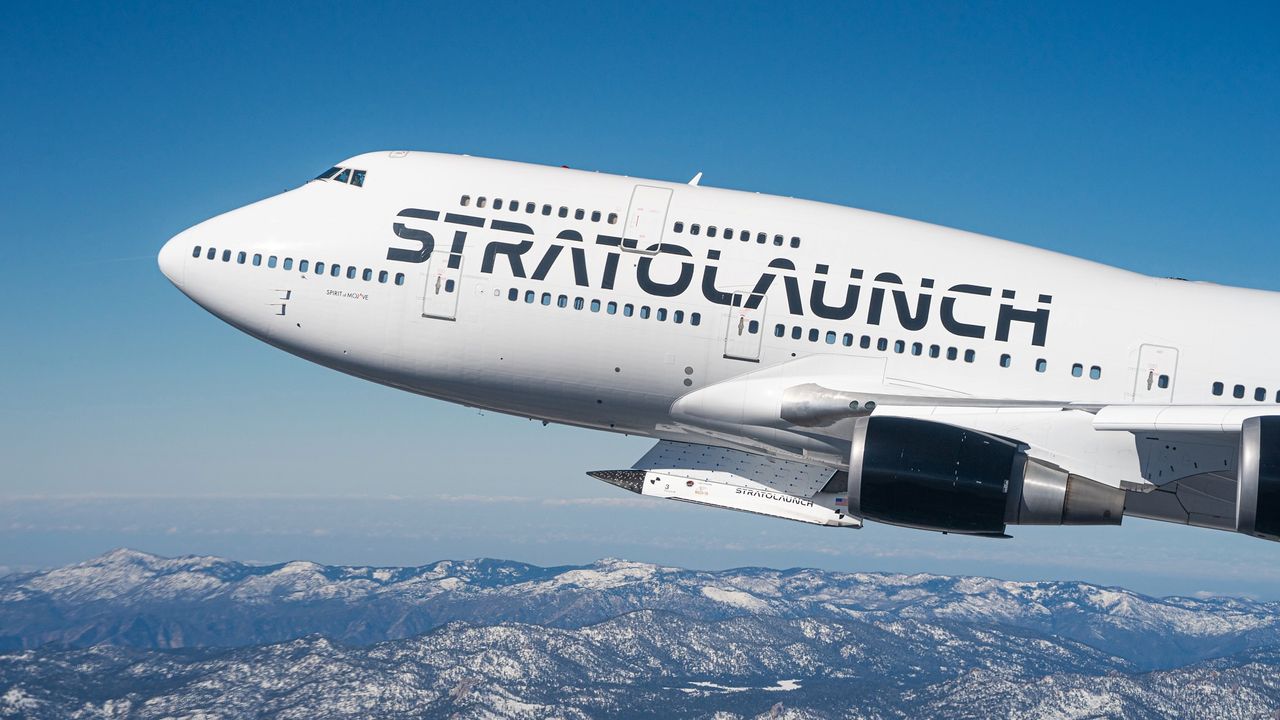
Aerospace firm Stratolaunch achieves a major milestone in high-speed aviation by completing more than ten successful flights of its autonomous hypersonic vehicle, Talon-A. Operating primarily out of the Mojave Air and Space Port in California, the reusable craft marks a significant leap forward in the rapid development of ultra-fast flight technologies. This milestone, reached in late July, cements the company's position as a leader in private aerospace testing. The vehicle routinely glides through the upper atmosphere at speeds exceeding Mach 5, providing a crucial platform for testing advanced aerospace components under extreme conditions.
The sleek Talon-A measures 28 feet in length with an 11.3-foot wingspan, designed to withstand the immense thermal and aerodynamic stresses of hypersonic travel. Unlike traditional rockets, this vehicle begins its journey suspended beneath a massive carrier aircraft. Stratolaunch utilizes two distinct launch platforms: a modified Boeing 747 named Spirit of Mojave, and Roc, a colossal custom-built aircraft that boasts the largest wingspan in aviation history at 385 feet. After these giant carriers release Talon-A over the Pacific Ocean, the autonomous craft ignites its rocket engine to surge past five times the speed of sound before gliding back to Earth for a conventional runway landing at Vandenberg Space Force Base.
These high-speed missions serve as a real-world laboratory for evaluating cutting-edge sensors, communication systems, and thermal protection materials. Because hypersonic flight generates extreme heat and pressure, physical testing is essential to validate computer simulations. While specific details about the payloads remain highly classified due to national security sensitivities, prominent defense organizations like the U.S. Missile Defense Agency utilize the platform. Global militaries are heavily investing in hypersonic technology because maneuverable vehicles traveling at these speeds are incredibly difficult to track and intercept compared to traditional ballistic missiles. Crucially, Talon-A operates strictly as a reusable testbed rather than a weapon system itself.
Stratolaunch operates in an increasingly competitive commercial market for high-speed testing services. Rocket Lab also offers hypersonic flight opportunities using its HASTE vehicle, a modified suborbital variant of its reliable Electron rocket. Since its debut in mid-2023, HASTE has completed nine successful missions and is poised for rapid expansion. The military's growing appetite for rapid testing is evident in Rocket Lab's recent $190 million contract to conduct 20 dedicated HASTE missions, highlighting the lucrative nature of the defense-backed hypersonic sector.
The success of these private aerospace programs signals a fundamental shift in how the aerospace industry approaches hypersonic research. Historically, hypersonic flight testing was an incredibly rare, expensive, and risky endeavor reserved almost exclusively for major government agencies. By transforming these complex missions into a routine, commercial service, private operators drastically lower the barrier to entry for researchers. This newfound accessibility allows defense contractors, academic institutions, and government agencies to iterate and innovate at an unprecedented pace, accelerating the deployment of next-generation aerospace technologies.
Looking ahead, the demand for hypersonic testing shows no signs of slowing down, prompting companies to scale up their operational capacities. Stratolaunch plans to increase its flight frequency, leveraging its fleet of carrier aircraft and multiple Talon-A vehicles to accommodate a growing backlog of customers. As the technology matures, these reusable platforms will likely pave the way for broader applications, potentially influencing the future of commercial space access and ultra-fast global transport. The race to dominate the high-speed corridor of the atmosphere is officially underway, with reusable autonomous vehicles leading the charge.
Originally reported by Space.com
What's Your Reaction?
 Like
0
Like
0
 Dislike
0
Dislike
0
 Love
0
Love
0
 Funny
0
Funny
0
 Angry
0
Angry
0
 Sad
0
Sad
0
 Wow
0
Wow
0


.jpg)