


.jpg)
















Spain Condemns EU Nations' Response to Ceuta Migrant Crisis
Spain's PM Pedro Sánchez condemns 'selfish' EU reactions after Italy and others suspend Schengen ties over the Ceuta migrant crisis. Read the latest.

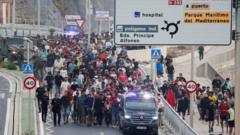
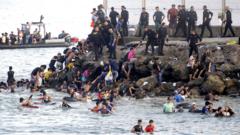
Spanish security forces successfully restore order in the North African enclave of Ceuta following an unprecedented border breach on July 30, where approximately 60,000 migrants crossed over from Morocco. While authorities have already returned the vast majority of these individuals, the humanitarian crisis leaves a devastating toll with at least 67 confirmed deaths. The rapid escalation triggers an immediate political firestorm across Europe, exposing deep divisions within the European Union regarding border security and migration management.
In the immediate aftermath of the chaotic border collapse, Spanish soldiers and police officers quickly mobilize to escort the migrants back to the Moroccan border. Local businesses in the enclave are now reopening as daily life returns to normal, reversing what was briefly a highly volatile situation. To prevent future unauthorized crossings, Spain is actively installing a new inflatable maritime barrier along the coast. Meanwhile, diplomatic tensions flare as several European nations react sharply to the incident, prompting Spain to defend its rapid 48-hour response which successfully blocked any onward travel to the European mainland.
Ceuta, along with Melilla, represents one of the only land borders between the European Union and Africa, making it a frequent flashpoint for migration. Although these enclaves are Spanish territories, they do not belong to the border-free Schengen zone, a crucial distinction in the ongoing debate over European security. The sudden surge on Thursday caught border guards off guard, leading to a temporary collapse of security infrastructure before military reinforcements arrived to stabilize the perimeter. Historically, Spain and Morocco maintain a complex security partnership to manage this frontier, which relies heavily on diplomatic cooperation to prevent mass crossings.
The incident triggers swift retaliatory measures from European neighbors, most notably Italy, which temporarily suspends its Schengen agreement with Spain. Leaders from Denmark and Finland voice strong support for Italy's hardline stance, while the Czech Republic demands the temporary suspension of Spain's Schengen membership altogether. In response, Spanish Prime Minister Pedro Sánchez defends Spain's decisive action in a letter to the European Commission, criticizing the backlash as prejudiced and politically motivated. Sánchez emphasizes that Spain secured the external border within 48 hours and warns that divisive rhetoric threatens the unity of the entire bloc.
This crisis highlights a growing ideological rift within the European Union over how to handle migration challenges at the external borders. The unilateral actions of member states to restrict travel within the Schengen zone threaten to undermine one of the founding principles of European integration. A coalition of 22 EU nations is now demanding emergency talks to address these systemic vulnerabilities and coordinate a unified response. The situation underscores the immense pressure on frontline states like Spain, which must balance humanitarian obligations and strict border enforcement under the intense scrutiny of their European partners.
Moving forward, European interior ministers will convene for urgent video conferences to negotiate a collective strategy and mobilize financial and technical support for Spain. These discussions will focus on reinforcing external borders while attempting to repair the diplomatic fractures caused by the sudden crisis. The success of these negotiations will determine whether the European Union can establish a cohesive, shared responsibility model for migration or if individual nations will continue to retreat behind closed borders. Ultimately, the resolution of the Ceuta crisis will shape the future of European solidarity and the resilience of the Schengen agreement.
Originally reported by BBC World
What's Your Reaction?
 Like
0
Like
0
 Dislike
0
Dislike
0
 Love
0
Love
0
 Funny
0
Funny
0
 Angry
0
Angry
0
 Sad
0
Sad
0
 Wow
0
Wow
0