

















On This Day in Space: Soviet Luna 24 Launches to the Moon
On August 9, 1976, the USSR launched Luna 24, its final robotic moon mission. The probe returned lunar soil samples that revealed crucial traces of water.

On August 9, 1976, the Soviet Union launches its final lunar mission, Luna 24, from the Baikonur Cosmodrome in Kazakhstan, marking the end of an era in the Cold War space race. This robotic spacecraft successfully touches down in the moon's Mare Crisium region to collect and return lunar soil samples. The historic mission represents the culmination of Soviet robotic exploration, delivering precious lunar material back to Earth just weeks after its departure.
Riding aboard a Proton-K rocket, the sophisticated probe completes its journey to the lunar surface in just over a week. Utilizing an advanced three-stage system consisting of a descent stage, an ascent stage, and a return capsule, Luna 24 drills into the dusty surface to gather approximately 170 grams of lunar regolith. After less than twenty-four hours on the moon, the spacecraft's ascent stage blasts off, carrying the sealed capsule back to Earth for a safe landing on August 22, 1976. Subsequent laboratory analysis of these pristine samples reveals a groundbreaking discovery: minute traces of water locked within the lunar soil, measuring about 0.1 percent by mass.
While the United States wins the race to land humans on the moon, the Soviet Union establishes an incredibly successful parallel track of robotic exploration. The ambitious Luna program achieves several historic milestones, including the first spacecraft to impact the moon with Luna 2 in 1959, and the first successful soft landing with Luna 9 in 1966. Even as American astronauts wrap up their crewed lunar excursions in the early 1970s, Soviet engineers continue to push the boundaries of automated space exploration with sophisticated rovers and sample return missions, proving that robotic probes can conduct high-level science.
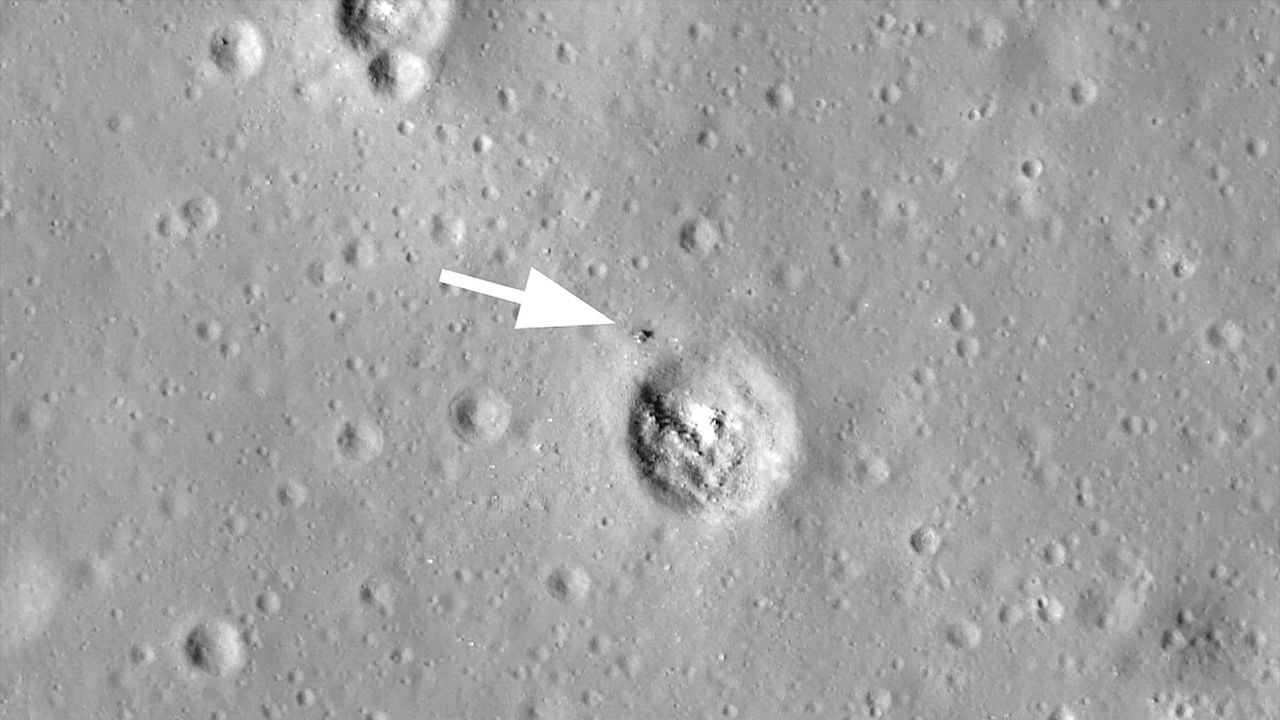
Modern orbital imaging continues to shed light on these historic landing sites, offering fresh perspectives on the Soviet program's mixed record of triumph and failure. High-resolution cameras aboard contemporary lunar satellites now provide clear views of the hardware left behind, including the descent stages of Luna 16, 20, and 24. These orbital photographs also solve long-standing mysteries, confirming that the ill-fated Luna 23 mission likely tipped onto its side during landing, which prevented it from deploying its drill and returning samples as its successor successfully did.
The legacy of the Luna 24 mission extends far beyond the geopolitical rivalry of the twentieth century, fundamentally reshaping scientific understanding of the moon's composition. The detection of water molecules in the returned soil challenges the long-held assumption that the moon is a completely dry, barren wasteland. This crucial finding lays the groundwork for modern lunar science, shifting the focus of space agencies toward resource utilization and the search for frozen water reserves that could sustain future human outposts.
Today, the race to the moon is heating up once again, with nations targeting the resource-rich lunar south pole for permanent bases. Although Russia attempts to revive its historic lunar legacy in August 2023 with the Luna 25 lander, the spacecraft's crash during an orbital maneuver highlights the ongoing difficulties of lunar navigation. As international space programs and private enterprises prepare for a new wave of robotic and crewed missions, the pioneering achievements of the early Luna program continue to serve as both an inspiration and a technical blueprint for navigating deep space.
Originally reported by Space.com
What's Your Reaction?
 Like
0
Like
0
 Dislike
0
Dislike
0
 Love
0
Love
0
 Funny
0
Funny
0
 Angry
0
Angry
0
 Sad
0
Sad
0
 Wow
0
Wow
0