
















Trump Claims Board of Peace Agrees on Hamas Disarmament
Iran claims drone strikes on US bases in Kuwait while Trump announces a Board of Peace agreement on Hamas disarmament amid ongoing Middle East tensions.

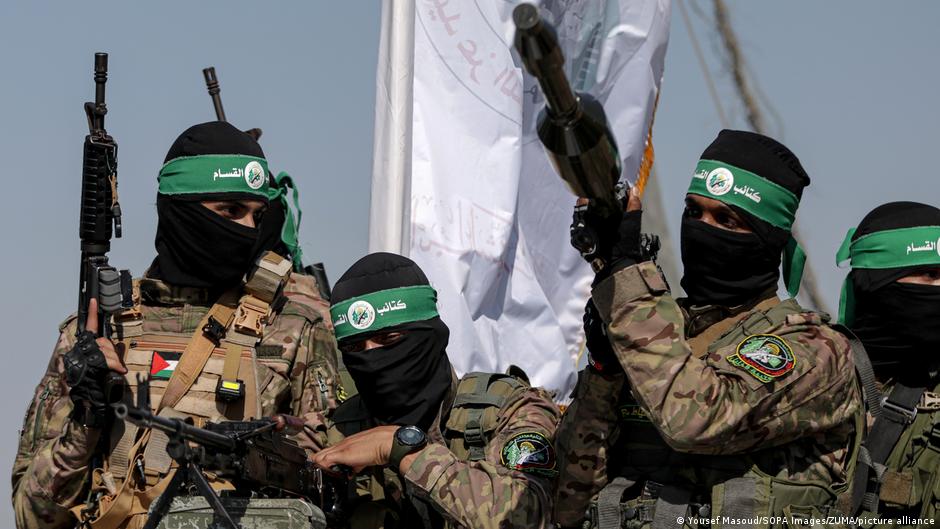
On Friday, July 31, 2026, regional tensions escalate as Iranian forces launch a retaliatory drone strike against strategic United States military installations in Kuwait, while a fragile peace agreement in Gaza attempts to transition administrative power away from Hamas. The Iranian aerial assault targets the Ahmed Al-Jaber Air Base in southern Kuwait, striking critical infrastructure including fighter jet hangars and satellite communications systems. Simultaneously, international mediators push forward with a delicate disarmament proposal for the Gaza Strip, highlighting the volatile and interconnected nature of the Middle East conflict.
Military officials in Tehran confirm that the drone operation directly responds to a recent American airstrike on a residential property on Qeshm Island, a highly contested territory in the strategic Strait of Hormuz. Meanwhile, the newly proposed peace framework for Gaza outlines a plan where Hamas transfers civilian administrative control to a newly formed technocratic body known as the National Committee for Administration of Gaza. Under this arrangement, the group agrees to surrender its arsenal to this transitional committee and international mediators rather than directly to Israeli forces, establishing a structured timetable for cataloging weapons.
The targeted Kuwaiti airbase serves as a crucial operational hub for American aerial reconnaissance and combat missions, making it a high-value target for Iranian forces seeking to disrupt US military capabilities. This escalation occurs against the backdrop of years of friction in the Strait of Hormuz, a vital global shipping lane where maritime skirmishes frequently threaten international trade. In Gaza, the geopolitical maneuvering follows months of devastating conflict that has displaced hundreds of thousands of families, redrawn territorial boundaries, and left civilian populations facing severe humanitarian crises with little hope of returning home.
Diplomatic observers note that the success of the Gaza peace plan remains highly uncertain due to fundamental disagreements over security guarantees. Israeli officials maintain a firm stance, insisting that their military forces will not withdraw past the designated security boundary, known as the yellow line, until Hamas completes its disarmament. Conversely, Hamas leadership declares that any surrender of weapons remains strictly contingent upon a total and immediate withdrawal of Israeli troops from the enclave. This deadlock threatens to derail the fifteen-point proposal currently being brokered by regional mediators from Egypt, Qatar, and Turkey.
The direct strike on a US-operated facility in Kuwait signals a dangerous expansion of the conflict, dragging neighboring Gulf states into the active theater of war and testing the limits of American deterrence. For ordinary Palestinians in Gaza, the transition of administrative authority to technocrats represents a pivotal shift that could either stabilize daily life or trigger further chaos. If successful, the establishment of the civilian committee could facilitate much-needed humanitarian aid distribution and initiate reconstruction, but any breakdown in the ceasefire risks igniting an even more intense wave of violence.
Looking ahead, the region stands at a critical crossroads where minor miscalculations could trigger a wider war. The international community watches closely to see if the United States will launch a direct counteroffensive against Iranian assets, potentially sparking a broader regional conflagration. At the same time, the viability of the Gaza disarmament schedule will serve as a litmus test for future diplomatic resolutions in the Middle East. Whether these dual crises lead to a fragile stabilization or an unprecedented escalation depends entirely on the willingness of all parties to adhere to the negotiated red lines.
Originally reported by DW News
What's Your Reaction?
 Like
0
Like
0
 Dislike
0
Dislike
0
 Love
0
Love
0
 Funny
0
Funny
0
 Angry
0
Angry
0
 Sad
0
Sad
0
 Wow
0
Wow
0