











2026 Volkswagen Jetta Sport Review: Affordable Cars Aren't Dead
Read our review of the 2026 Volkswagen Jetta Sport. Discover how this affordable sedan keeps the budget-friendly car alive with a 1.5L turbo engine.

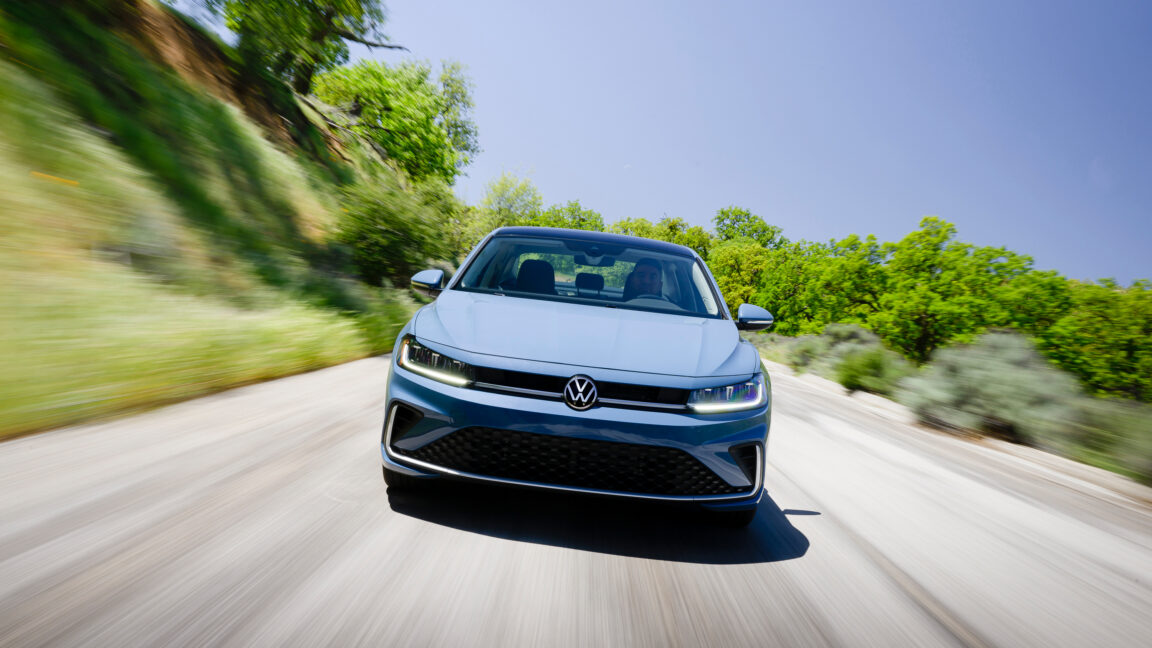
A grueling rush-hour test drive on Interstate 66 during a rainy summer afternoon exposes critical performance flaws in the newly updated 2026 Volkswagen Jetta Sport. Designed to offer an affordable entry into the sporty sedan market, this latest iteration struggles to deliver a smooth driving experience under real-world commuting conditions. The vehicle's erratic power delivery and hyper-sensitive throttle map quickly overshadow its sleek exterior updates, leaving drivers frustrated during peak-hour traffic.
Under the hood, the Jetta Sport houses a 1.5-liter turbocharged four-cylinder engine mated to an eight-speed automatic transmission. While the powerplant produces a modest 158 horsepower and 184 pound-feet of torque, the delivery of this power is highly unpredictable. Below 2,500 rpm, the engine feels sluggish, but crossing that threshold unleashes a sudden surge of torque that causes the front-wheel-drive sedan to lurch forward unexpectedly. Compounding this jerky ride is a lack of selectable drive modes and an intrusive, misconfigured speed alert that repeatedly warns the driver about winter tires at speeds over 20 mph.
Volkswagen positions the Sport trim as a middle ground between the entry-level Jetta and the high-performance Jetta GLI. Unlike the enthusiast-focused GLI, which boasts a larger engine and an optional manual gearbox, the standard Sport relies on a modified Miller-cycle engine designed primarily for fuel efficiency. This engineering choice utilizes a high 11.5:1 compression ratio and early-closing intake valves to maximize mileage, but it ultimately sacrifices the linear power band and refined throttle response that drivers expect from a modern turbocharged vehicle.
Automotive analysts note that the lack of dedicated drive modes severely limits the vehicle's adaptability. To mitigate the abrupt acceleration spikes, drivers must manually shift the transmission into sport mode, which holds gears longer and smooths out the turbocharger's sudden engagement. However, this temporary fix directly undermines the car's primary selling point by keeping engine revolutions high and significantly reducing fuel economy, forcing buyers to choose between a comfortable ride and efficient operation.
These drivability quirks present a significant hurdle for Volkswagen in a highly competitive compact sedan segment. Buyers in this category typically prioritize daily comfort, predictable handling, and hassle-free commuting. By delivering a powertrain that requires constant driver compensation and active management just to navigate bumper-to-bumper traffic smoothly, the Jetta Sport risks alienating practical consumers who want a stress-free daily driver rather than a frustrating learning curve.
Moving forward, Volkswagen faces the challenge of refining its engine calibration software to address these abrupt power transitions. While a simple software update or dealer service recalibration could theoretically smooth out the throttle mapping, the current iteration of the 2026 Jetta Sport remains a tough sell. Until the German automaker addresses these fundamental tuning issues, this budget-friendly sedan may struggle to win over commuters looking for a seamless blend of efficiency and performance.
Originally reported by Ars Technica
What's Your Reaction?
 Like
0
Like
0
 Dislike
0
Dislike
0
 Love
0
Love
0
 Funny
0
Funny
0
 Angry
0
Angry
0
 Sad
0
Sad
0
 Wow
0
Wow
0