












FIFA Defends Investment Plan Against UEFA Boycott Threats
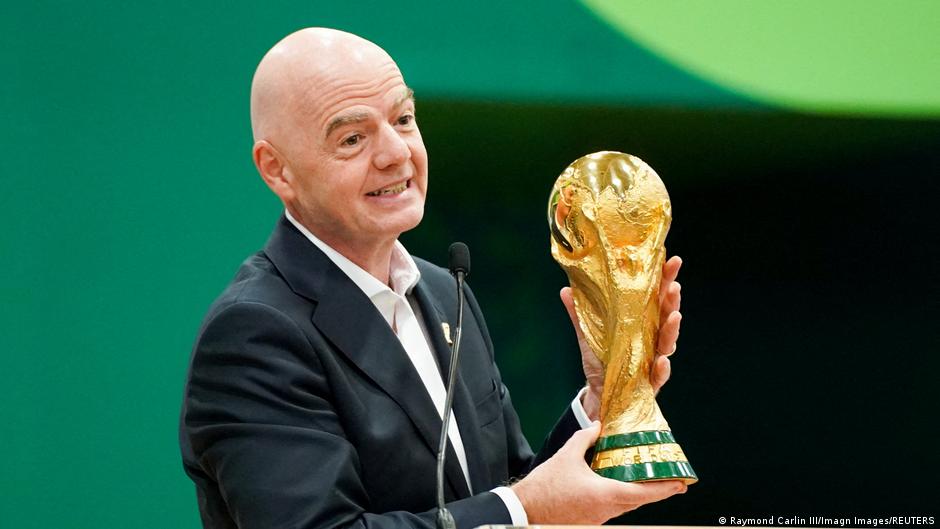
FIFA vows to push forward with its controversial investment plan despite boycott threats from UEFA and Concacaf, insisting "nobody is selling football."

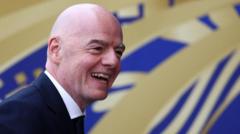
FIFA is facing a major rebellion from its most powerful regional confederations as it pushes forward with a controversial plan to sell minority stakes in its premier tournaments, including the World Cup, to private investors. The governing bodies of European and North American football, UEFA and Concacaf, are leading the charge against FIFA President Gianni Infantino's proposal to create a new commercial subsidiary for these events. This escalating civil war threatens to fracture the global game, with UEFA threatening a complete boycott of future World Cups if the privatization scheme proceeds.
Under the proposed initiative, a new entity named FIFA Forward Enterprise would manage the commercial rights of FIFA's flagship events, opening the door for external financial groups to purchase non-controlling shares. The American venture capital firm Thrive Eternal, led by Joshua Kushner, is positioned to spearhead the investment group. To secure the necessary support, Infantino is offering a lucrative financial incentive of forty million dollars to each member association that backs the plan, setting a strict September deadline for countries to claim an initial twenty-million-dollar installment.
Infantino, who has led FIFA since 2016, requires a simple majority of one hundred and six votes from the two hundred and eleven global member associations to pass the measure. However, the combined voting power of UEFA and Concacaf totals ninety-six members, meaning their unified opposition leaves FIFA with an incredibly narrow path to victory. This power struggle represents the most significant challenge to Infantino's leadership since he assumed office, exposing deep ideological divisions over the commercialization of international sport.
Opponents argue that treating the World Cup as a mere investment vehicle undermines its status as a sacred sporting legacy built by generations of players and fans. Critics accuse FIFA leadership of prioritizing self-enrichment over its duty as the custodian of the global game. In response, FIFA maintains that the initiative does not compromise the governance of football, asserting that the restructuring aims to empower local member associations by giving them direct ownership of new commercial opportunities.
The fallout from this dispute could reshape the landscape of international sports administration and finance. A boycott by European nations would effectively ruin the competitive and commercial value of the World Cup, which relies heavily on elite European teams and their massive global television audiences. Furthermore, the introduction of private equity into international football governance represents an unprecedented shift that could permanently alter how major sporting events are funded, scheduled, and broadcast.
As the September deadline approaches, FIFA is continuing its consultation process, insisting that member nations deserve the opportunity to vote based on facts rather than media speculation. The ultimate outcome hinges on whether Infantino can sway enough undecided nations outside of Europe and North America to bypass the opposition block. The coming weeks will determine whether global football can find a compromise or if it is headed toward an unprecedented institutional fracture that could forever change the World Cup.
Originally reported by BBC Sport
What's Your Reaction?
 Like
0
Like
0
 Dislike
0
Dislike
0
 Love
0
Love
0
 Funny
0
Funny
0
 Angry
0
Angry
0
 Sad
0
Sad
0
 Wow
0
Wow
0